Watch Straps & Bracelets — Every Type Explained
There are more strap types than most people realise, and the differences matter. A rubber FKM strap and a canvas strap are both cheap alternatives to boutique pricing, but one is fully waterproof and one absolutely is not. This guide covers every major material — what it actually feels like to wear, what watches it suits, what to look for when buying, and realistic price ranges for both boutique and affordable alternatives.
The short version on price: premium strap brands charge $40–$150 for materials that cost $5–$20 to source. The gap is branding and packaging, not quality. We cover both worlds honestly.

Fabric & Nylon Straps
Fabric straps are the most versatile and affordable option in watchmaking — and the most underrated. NATO straps launched the category in 1973 as standard British military issue, and the core design hasn't needed to change since. The same flat G10 nylon that costs the MOD pennies per unit works identically whether it's on a £5 Other sites order or a £60 boutique strap. Within this category there's real variety: NATOs and Zulus pass through under the case for a safety hold, woven nylons and Perlons wear more like traditional straps, and sailcloth and canvas bring texture and structure that suits sporty and field watches beautifully.
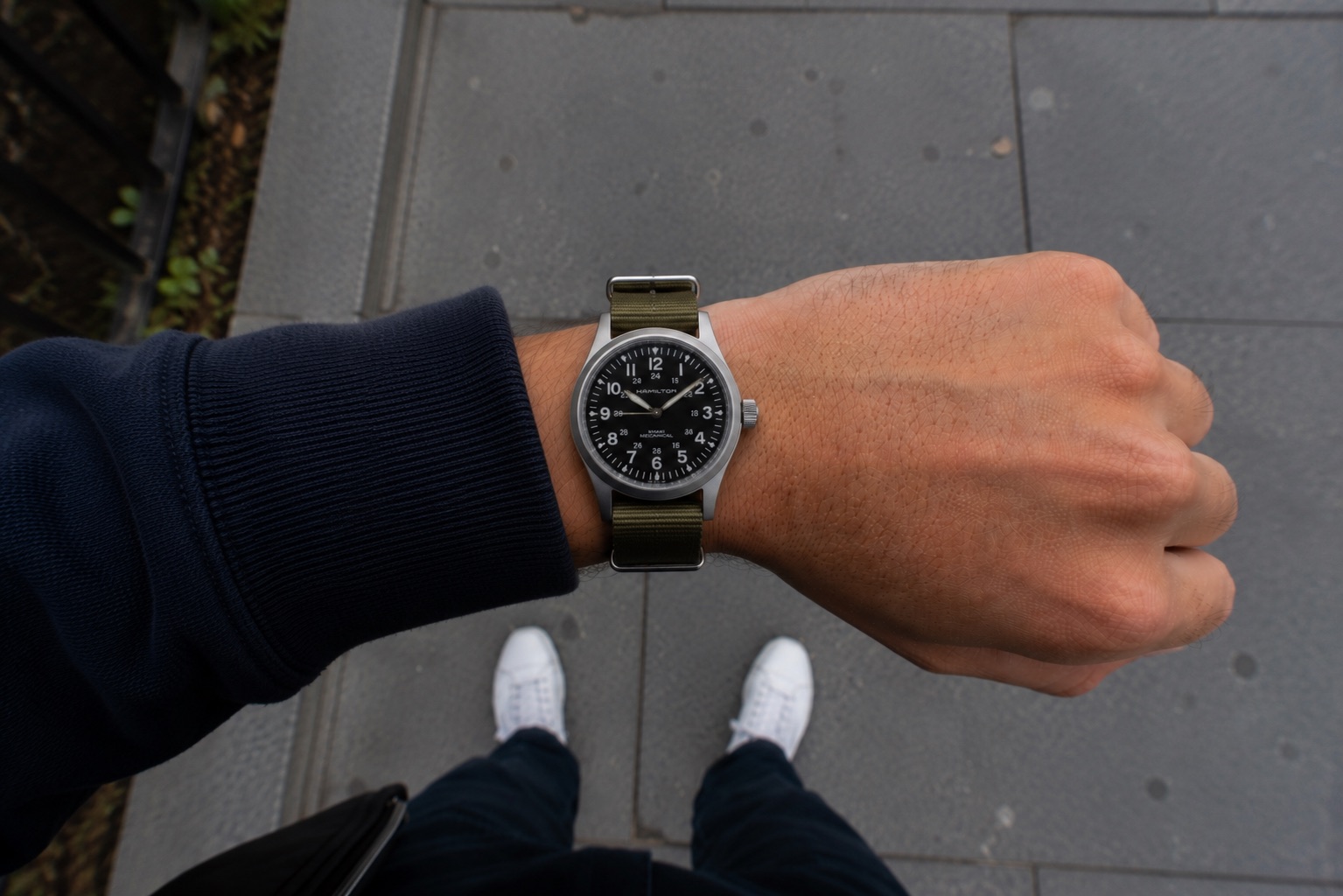 $3–$12
NATO Watch Straps
The most versatile strap in any collection — at a price that makes sense.
Read guide →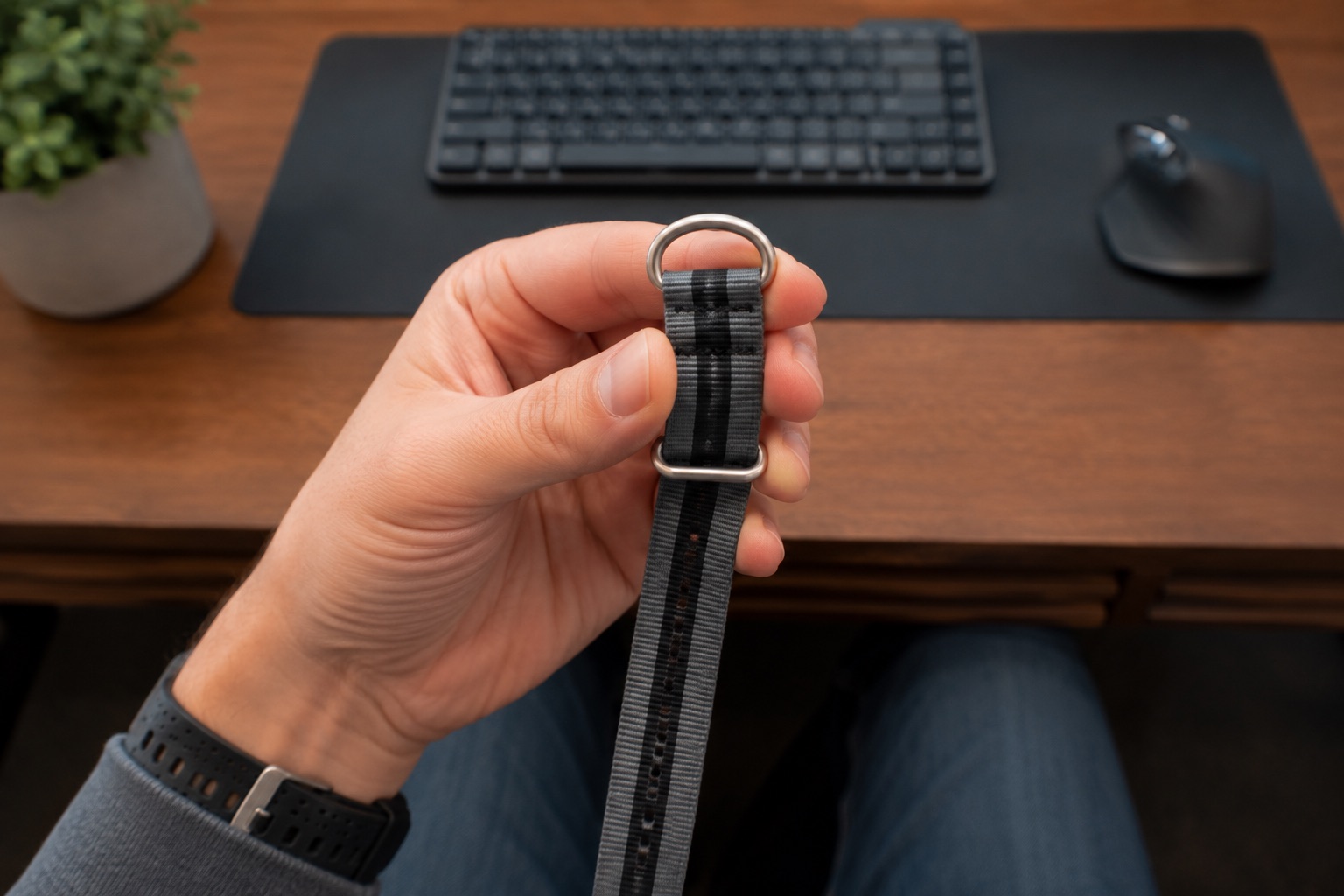 $4–$14
Zulu Watch Straps
The NATO's tougher sibling — chunkier hardware, bolder wrist presence.
Read guide →$4–$15Nylon Watch Straps
The most practical, versatile strap material. Also the most affordable.
Read guide →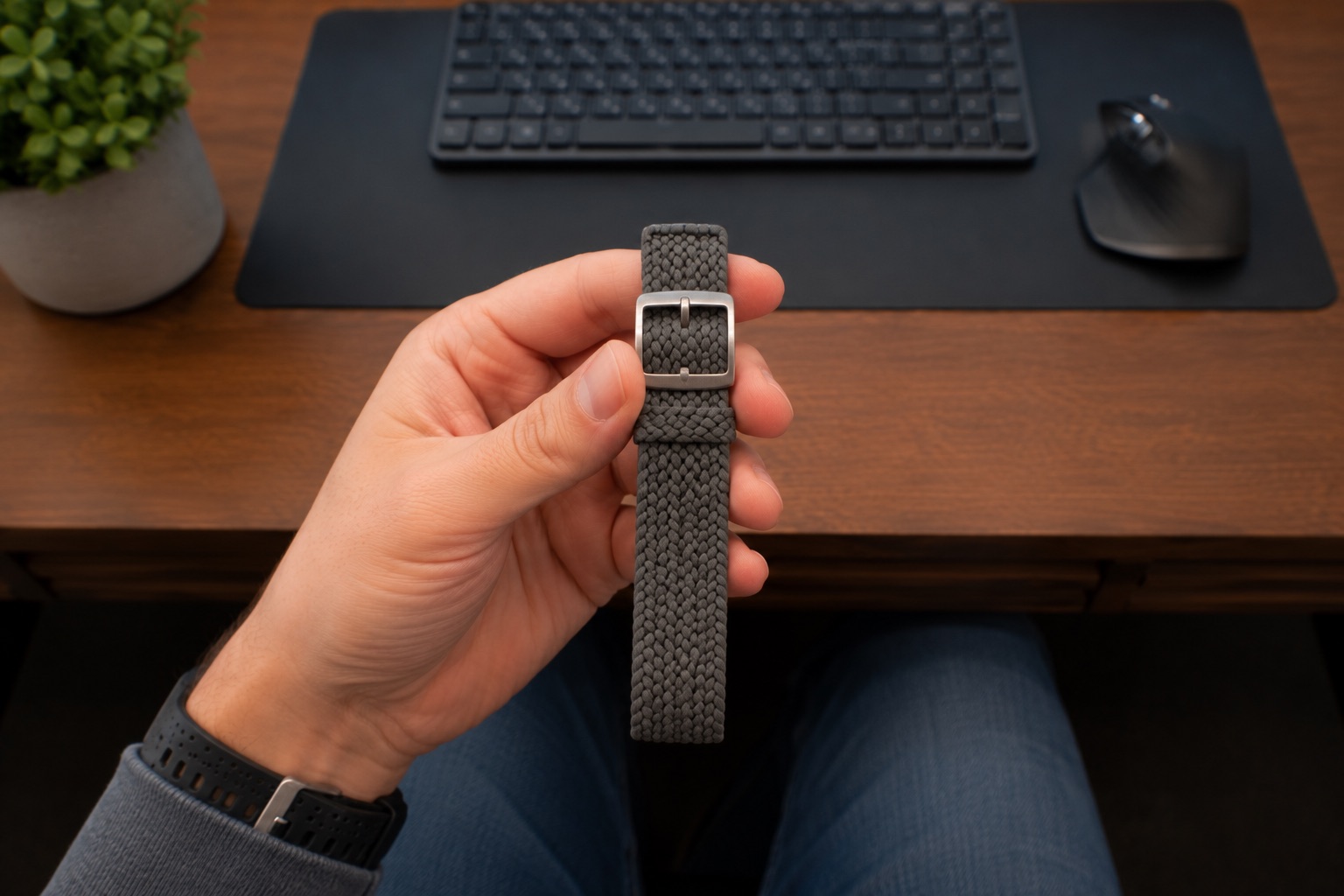 $4–$12
Perlon Watch Straps
The infinitely adjustable woven strap — perfect fit, every time.
Read guide →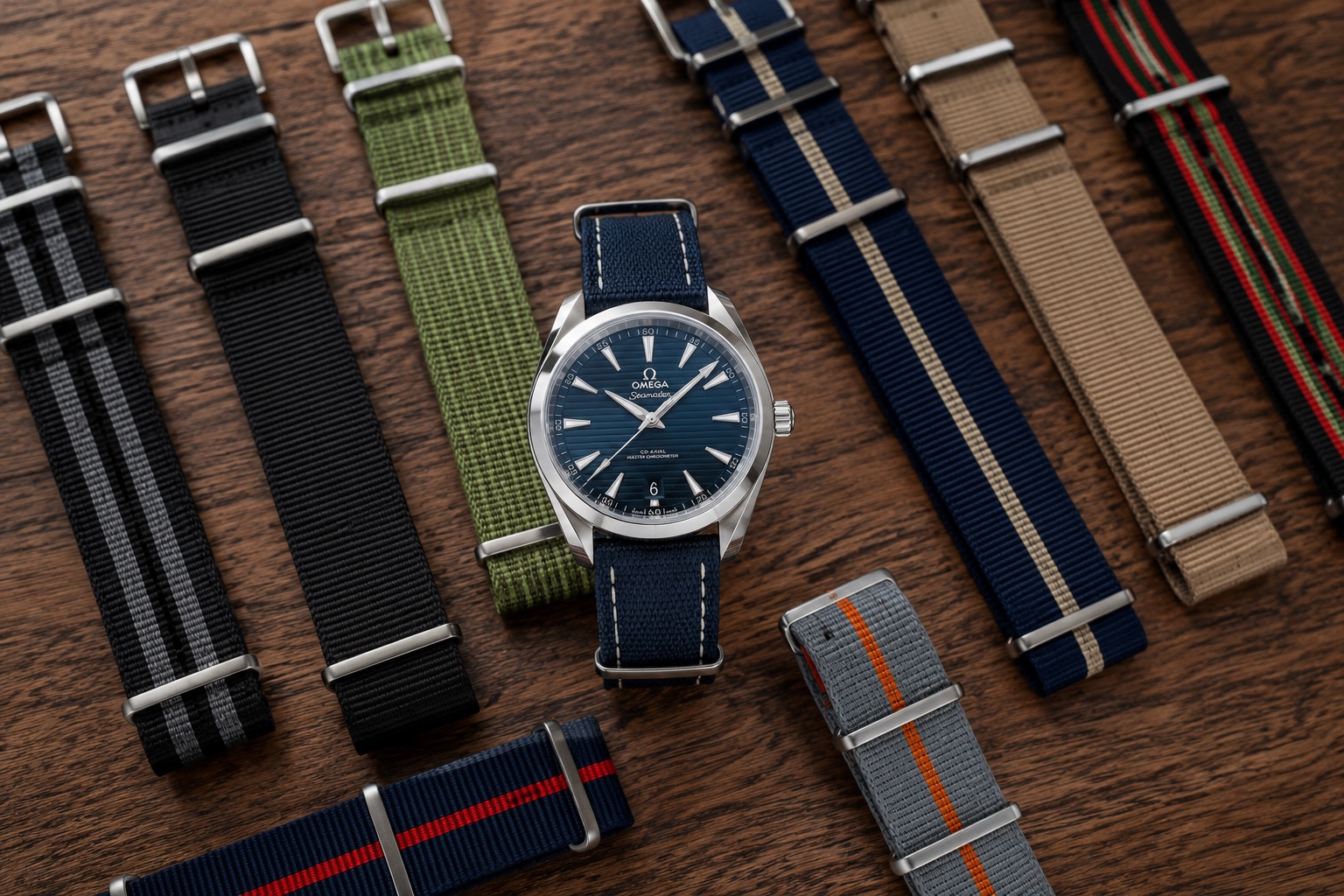 $8–$22
Sailcloth Watch Straps
Technical woven fabric straps for sport watches — without the premium price.
Read guide →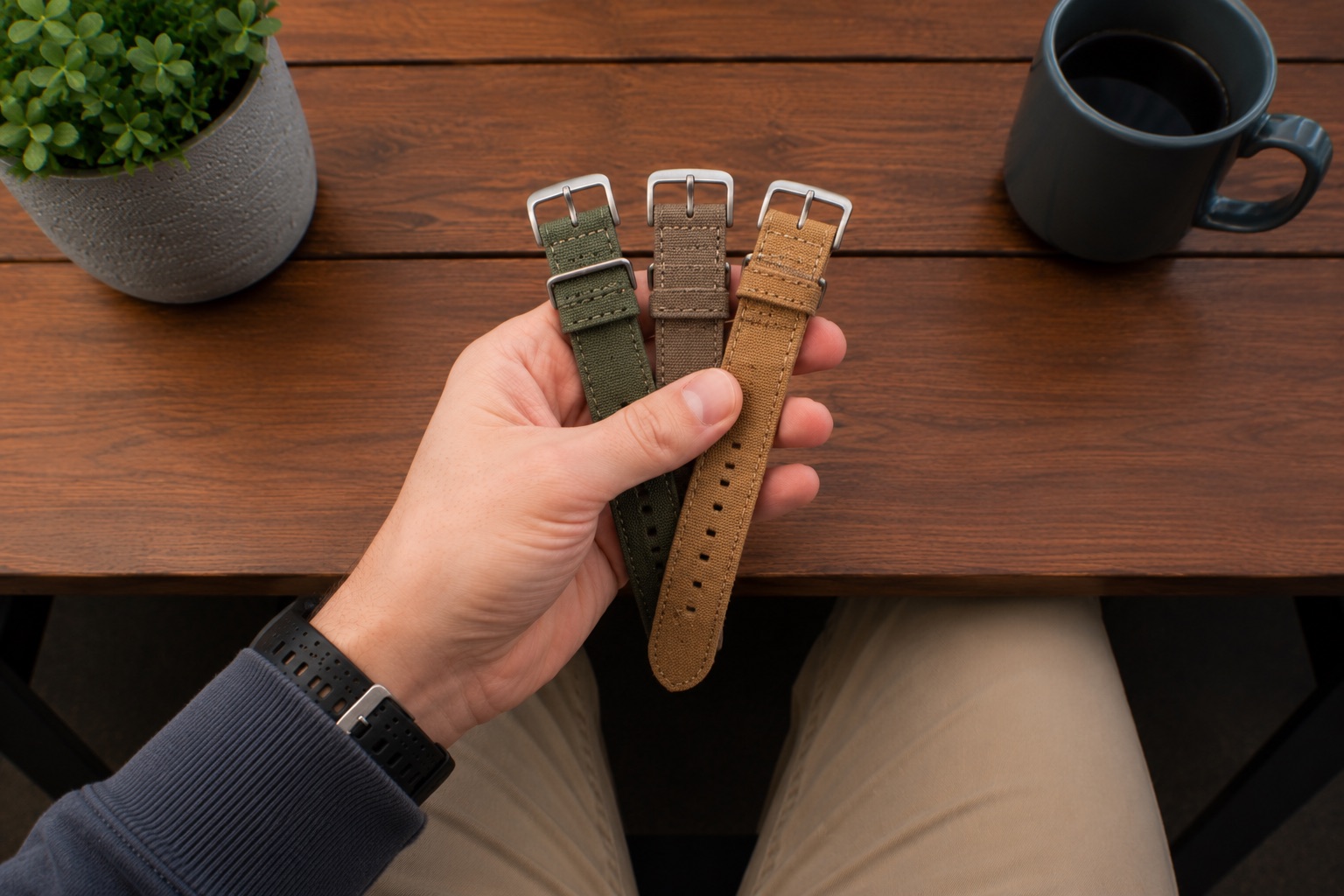 $5–$18
Canvas Watch Straps
The working strap of choice — rugged, textured, and easy to find cheap.
Read guide →Leather Straps
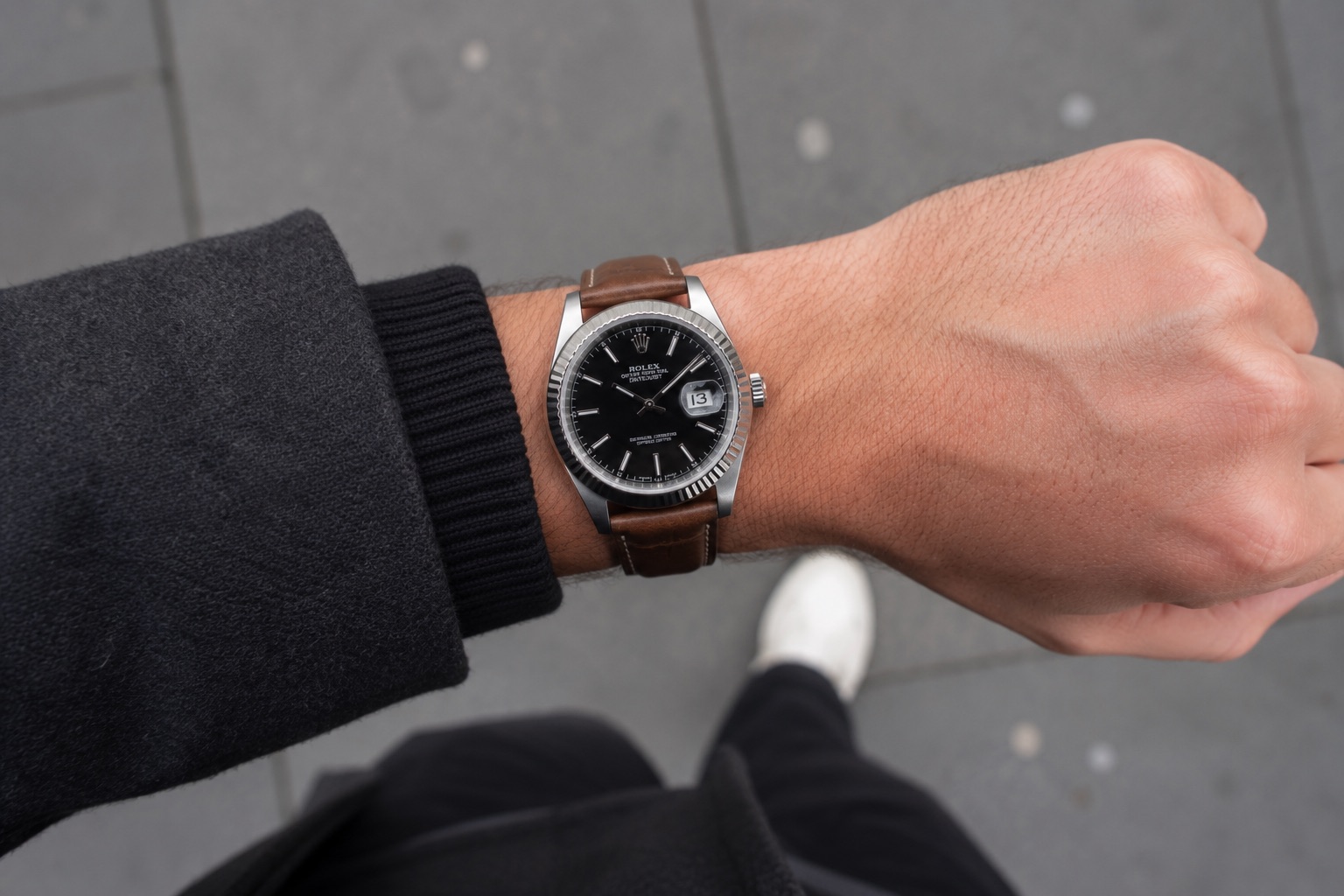
Leather straps are the classic choice for dress watches, field watches, and anything with a vintage soul. The material range is wider than most people realise — from everyday calfskin that breaks in quickly and costs very little, to napped suede that photographs beautifully and suits heritage pieces, to shell cordovan (from horse hide) that develops a mirror-like patina over decades of wear. The category also includes pilot straps: thick, padded leather with oversized buckles designed to be worn over a flight suit sleeve. Leather is the most personal strap material — it shapes itself to your wrist over time and tells the story of how and where you've worn it.
 $8–$25
Leather Watch Straps
Genuine leather doesn't have to cost $80. Here's where to find affordable alternatives.
Read guide →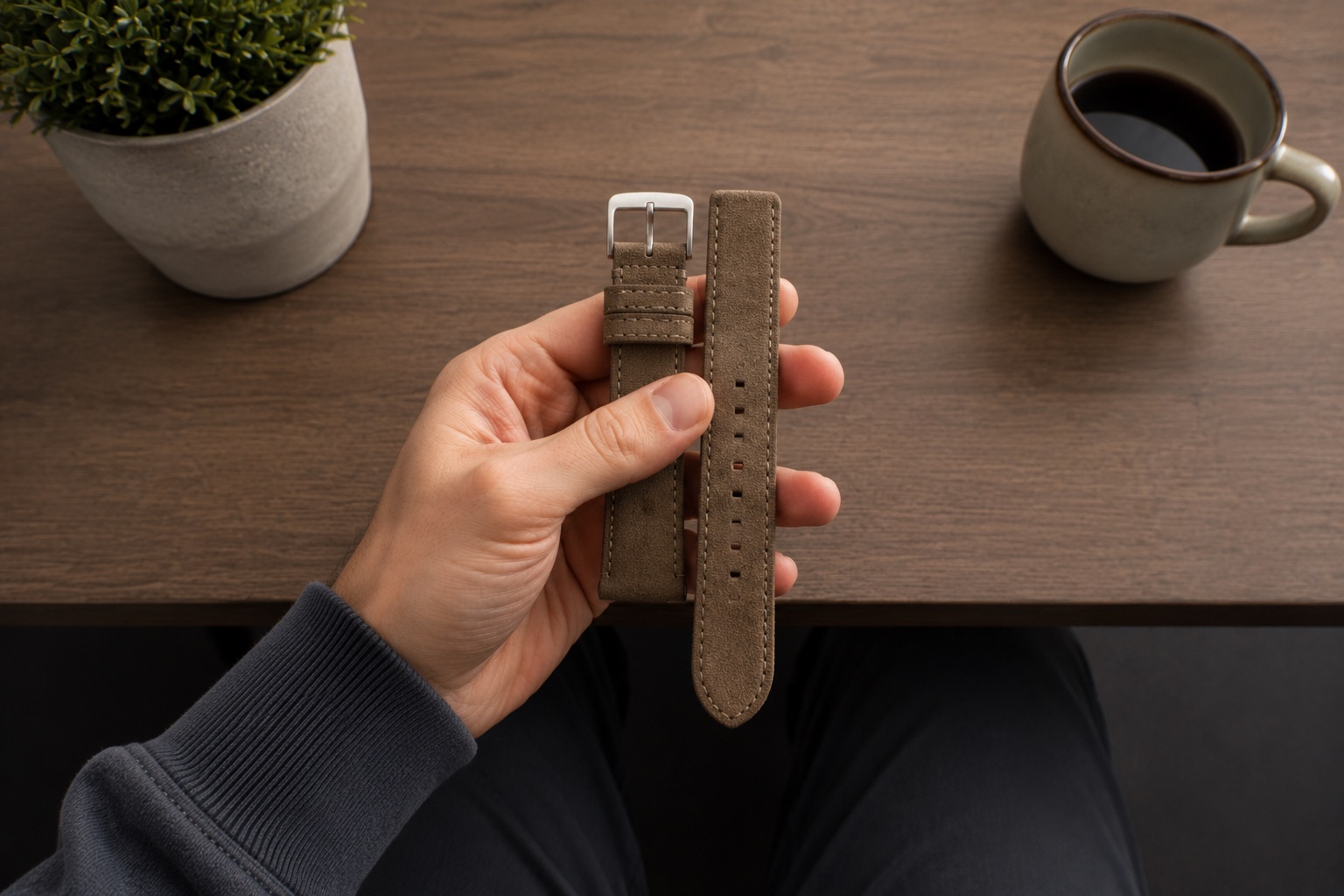 $8–$22
Suede Watch Straps
The softest leather finish in any strap collection — at prices that make collecting easy.
Read guide →$10–$30Cordovan Watch Straps
The most coveted leather in watchmaking — and where to find affordable alternatives.
Read guide →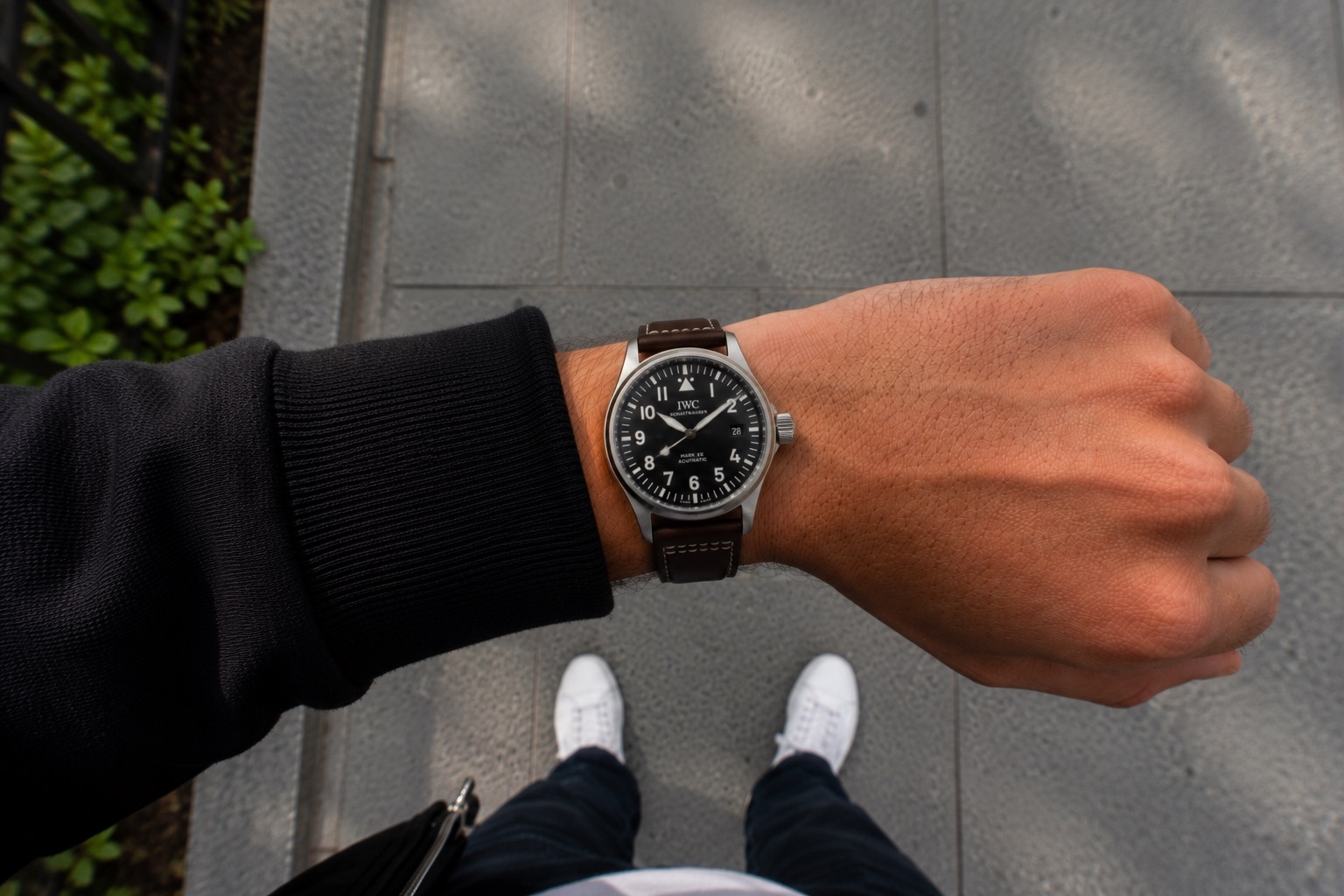 $5–$20
Pilot Watch Straps
Aviation-inspired straps for a fraction of the cockpit price.
Read guide →Rubber & Technical Straps
Rubber straps span a wider material and design range than most people realise. FKM (fluorocarbon rubber) is the premium compound — chemically inert, heat-resistant, the same material used in aerospace gaskets and medical devices. Tropic straps are a vintage perforated design originally made for dive watches in the 1960s and now collector-revived. Diver straps add ventilation channels and optional extension clasps for wetsuit use. Hybrid straps layer rubber with leather or canvas for a refined look. Integrated straps are case-specific with curved end links that sit flush against particular watch cases. If the strap is getting wet or sweated through, rubber is the honest answer.
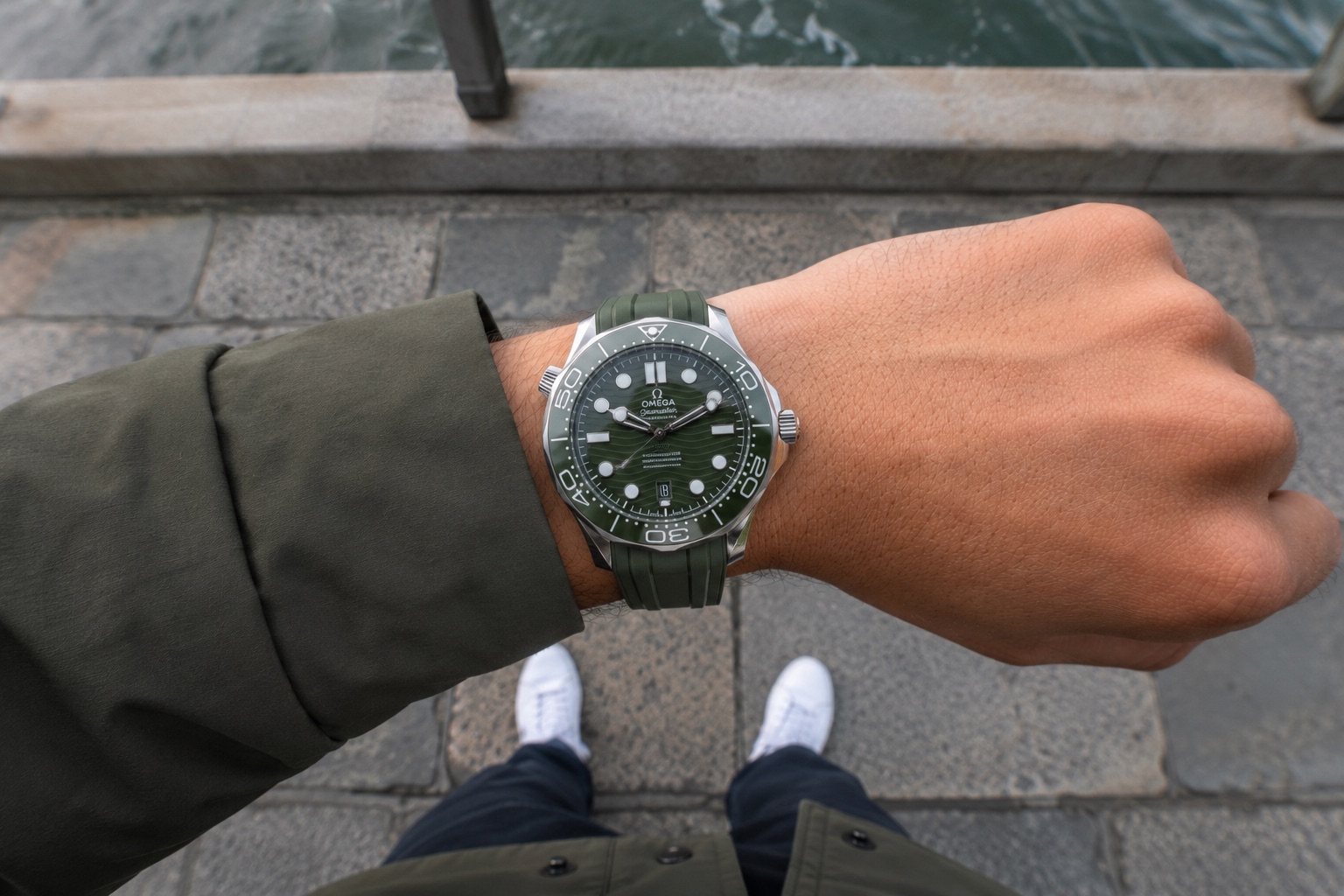 $5–$20
Rubber Watch Straps
Sport-ready and waterproof — without the sport-watch price tag.
Read guide →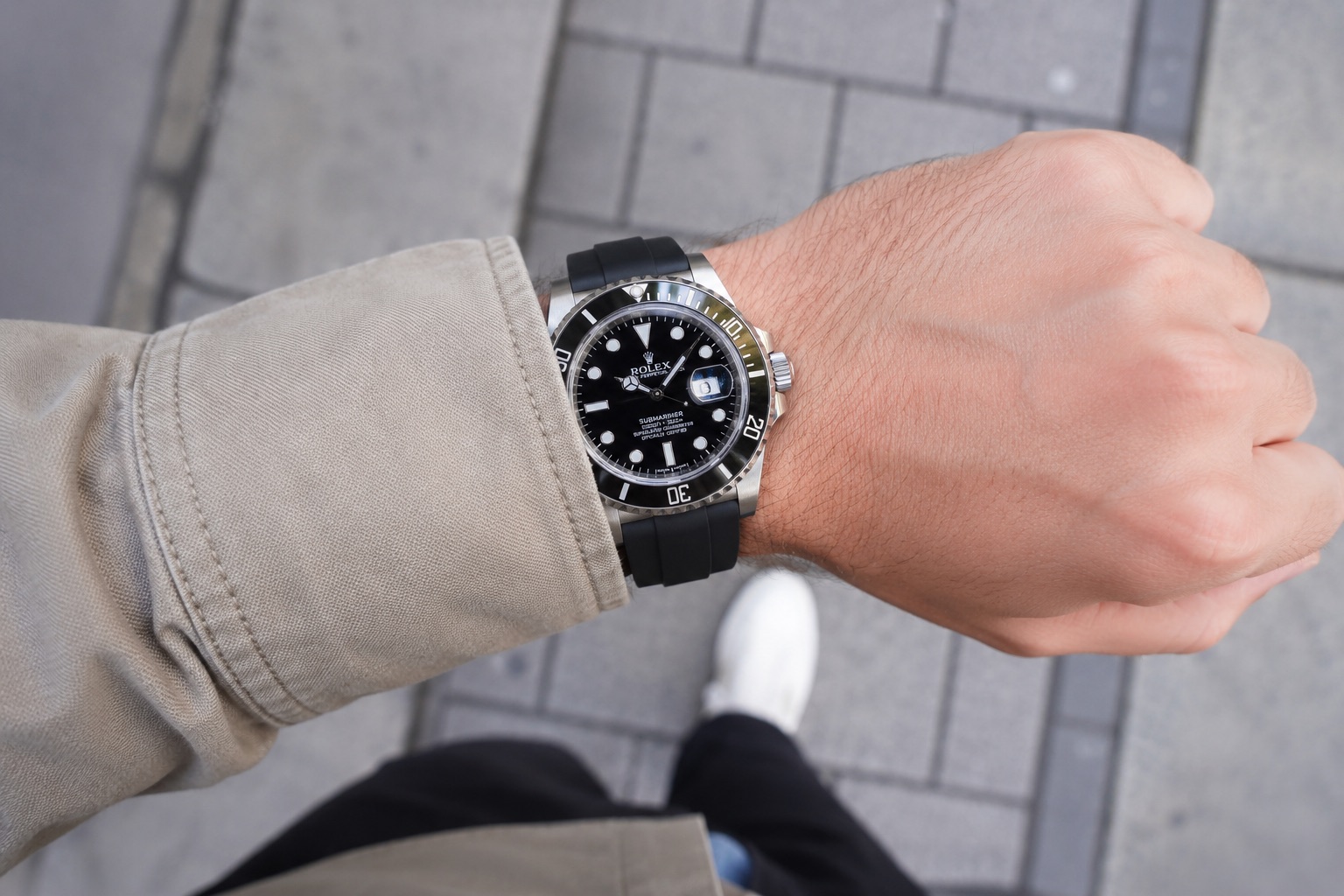
FKM Rubber Watch Straps
Fluorocarbon rubber that genuinely doesn't care about water, sweat, or chemicals — at a price that makes sense.
Read guide →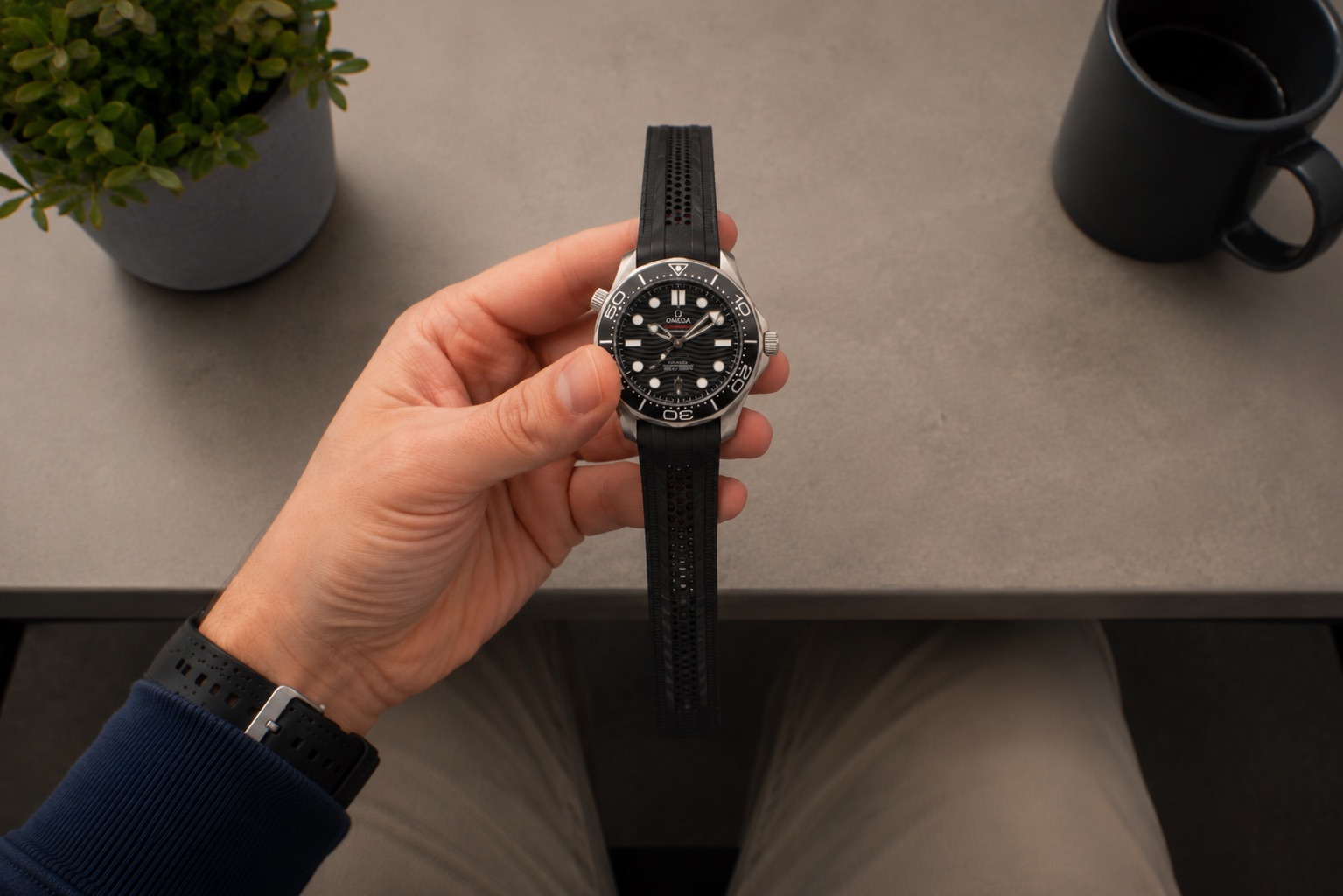 $5–$15
Tropic Watch Straps
The original perforated dive strap — and where to find it cheap.
Read guide →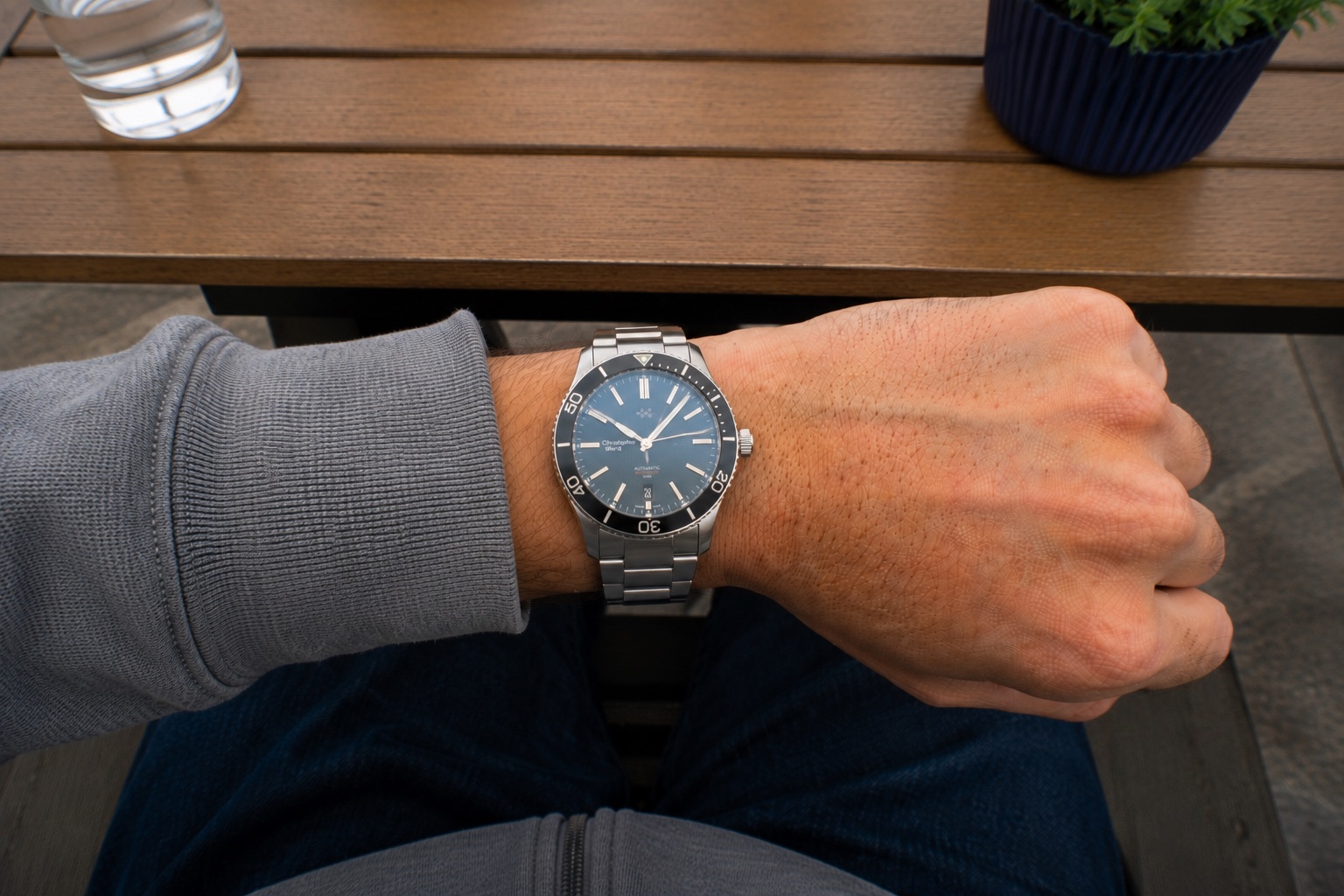
Diver & Vent Watch Straps
Straps built for the water — ventilated rubber that fits over a wetsuit and dries in seconds.
Read guide →Hybrid Watch Straps
Water-resistant underneath, refined on top — the practical compromise between rubber and leather.
Read guide →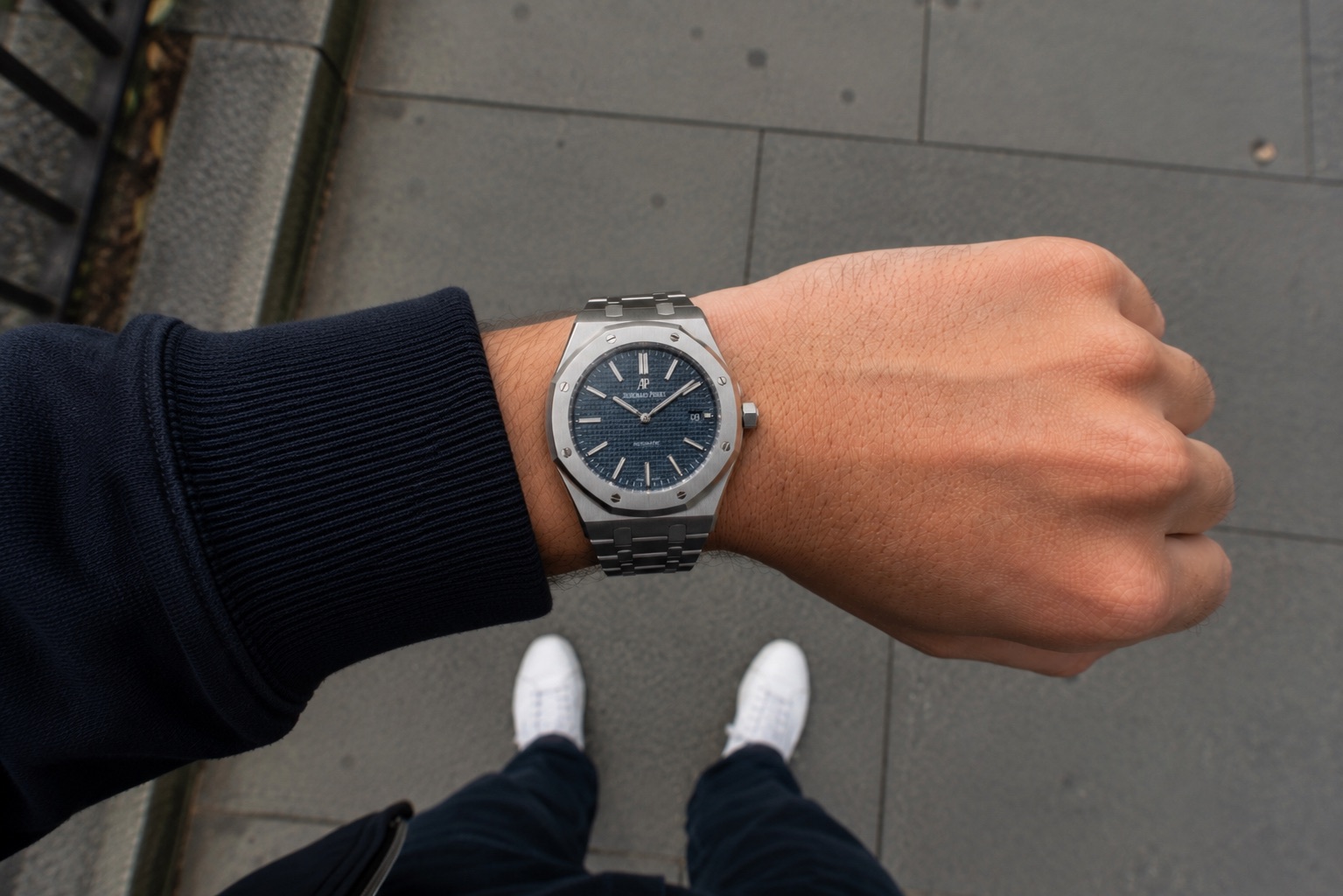
Integrated Watch Straps
Case-integrated designs explained — and where to find affordable strap options for AP, Nautilus, and more.
Read guide →Metal Bracelets
Metal bracelets are what most sport and dress watches ship with from the factory — and one of the most expensive things to replace directly from the brand. Rolex charges $400–$700 for an Oyster bracelet. Omega charges similar for a milanese. The gap between the brand-original and a well-reviewed aftermarket bracelet is real but narrower than the price difference suggests. The styles worth knowing: Oyster (three-link, sport), Jubilee (five-link, dressy), Milanese mesh (fine flat weave, infinitely adjustable), Beads of Rice (small oval links, 1950s–60s dress watches), Shark Mesh (folded steel scaled links, 1960s–70s dive watches), Bonklip (spring-clip expansion, 1940s–50s), and President (semi-circular convex links, Rolex Day-Date style). Each has a distinct character and a defined collector audience.
 $8–$20
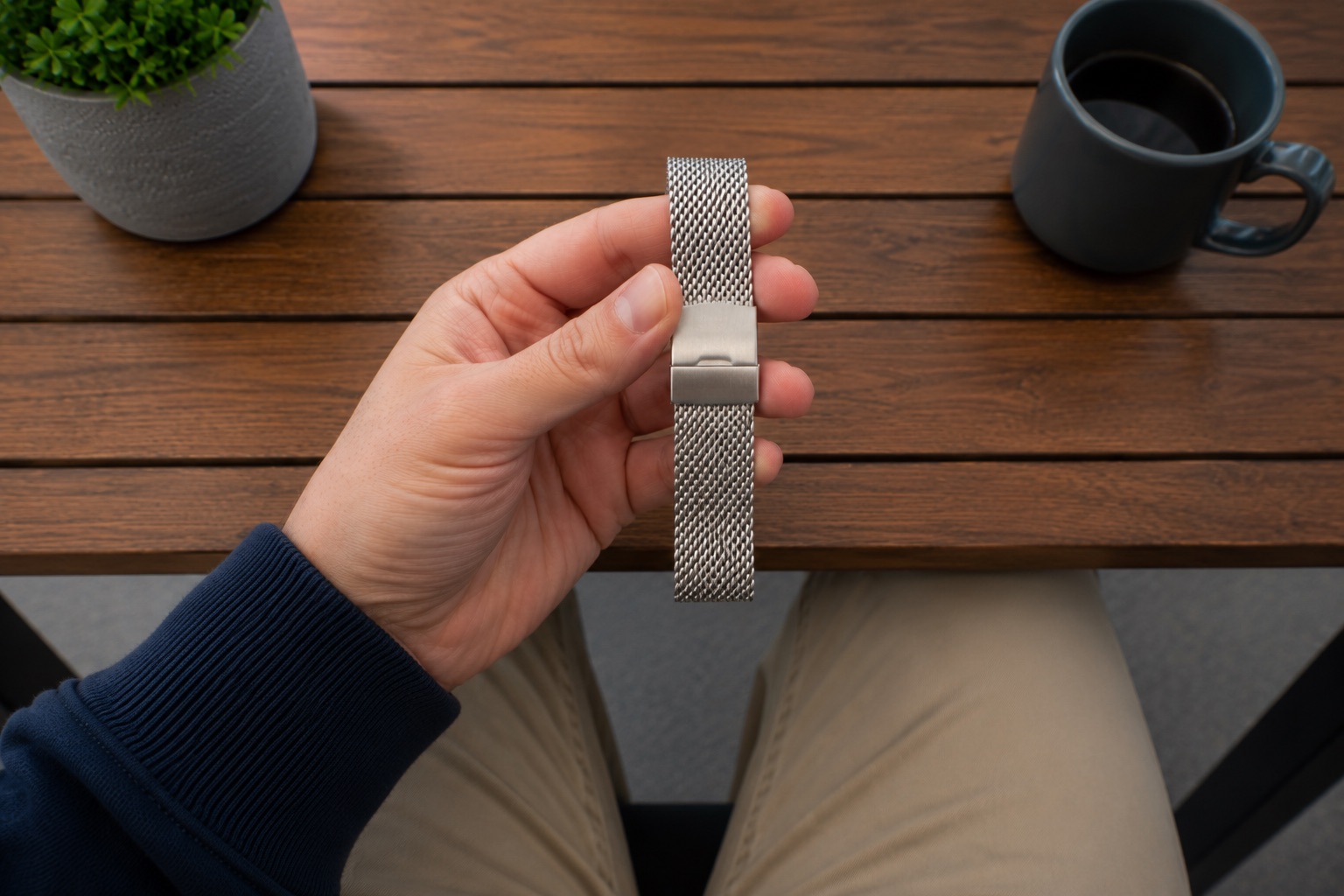
Milanese Watch Bracelets
Stainless steel mesh that belongs on a dress watch — not a smartwatch.
Read guide →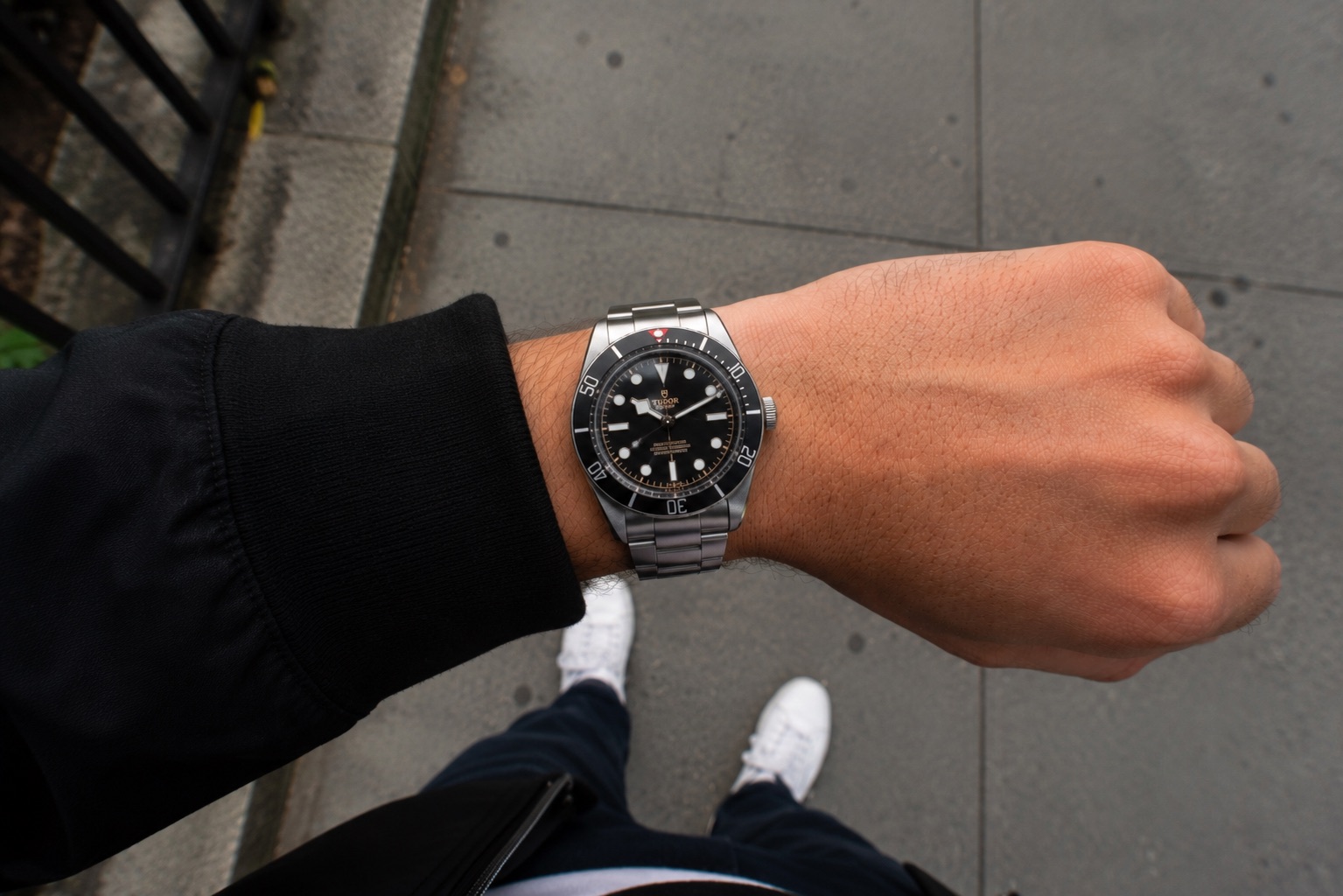 $8–$35
Best Aftermarket Metal Watch Bracelets
Metal oyster, jubilee, milanese, and beads-of-rice bracelets — without the brand markup.
Read guide →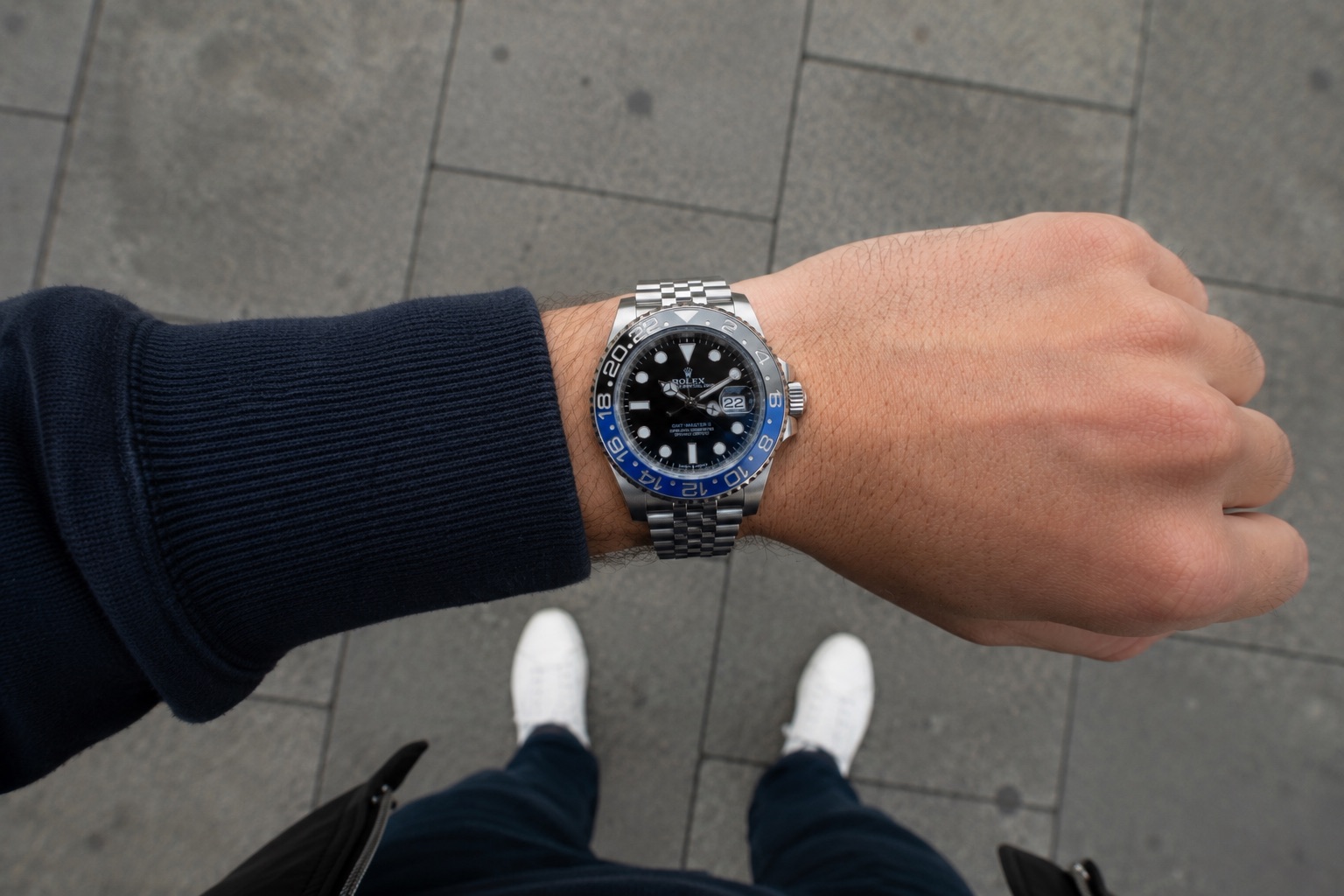 $10–$25
Oyster Watch Bracelets
The iconic three-link sport bracelet — at a fraction of what Rolex charges.
Read guide →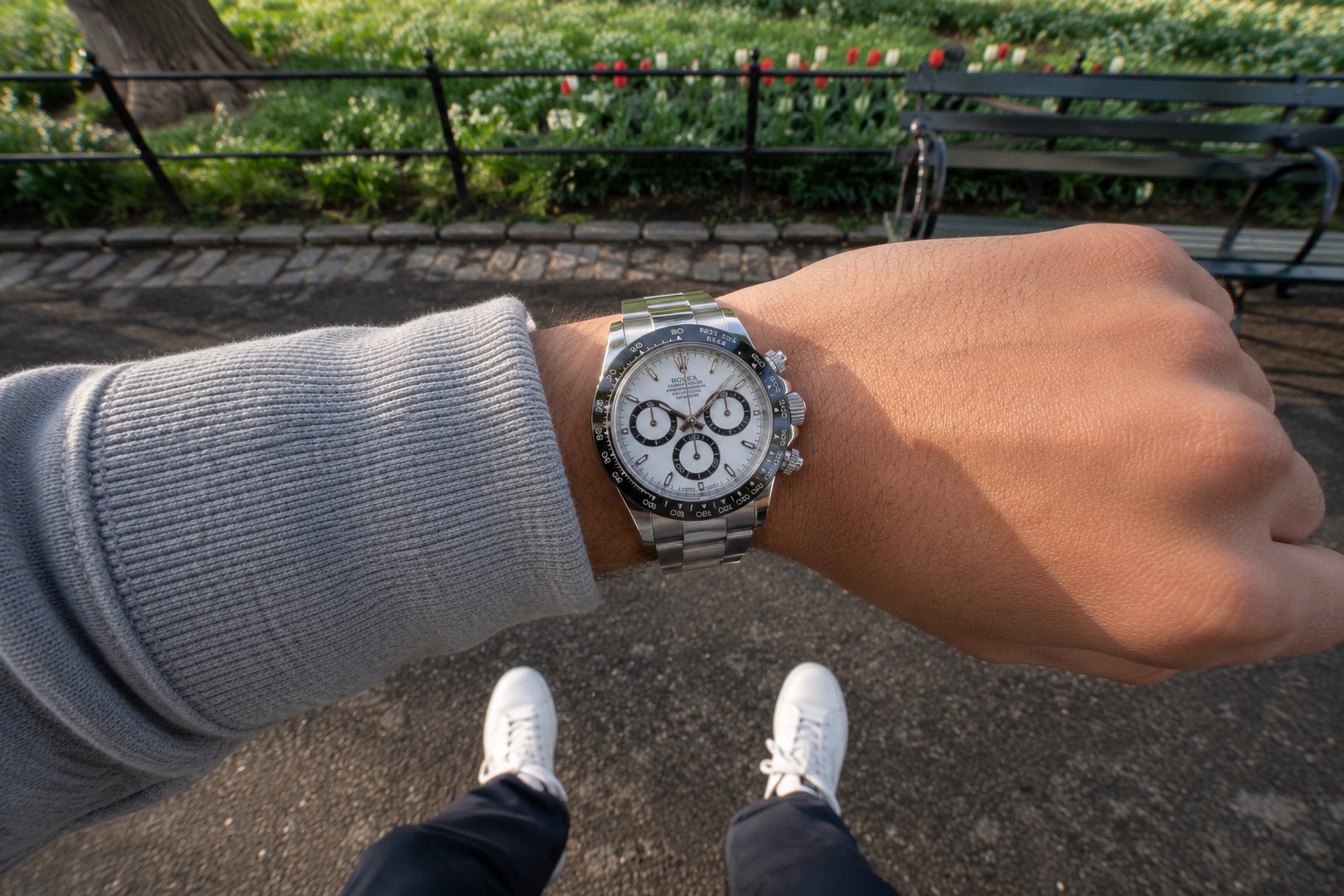 $10–$25
Jubilee Watch Bracelets
Five links of dressy elegance — without the Rolex price tag.
Read guide →$10–$25Beads of Rice Watch Bracelets
The oval-link vintage bracelet that defined 1960s horology — at modern prices.
Read guide →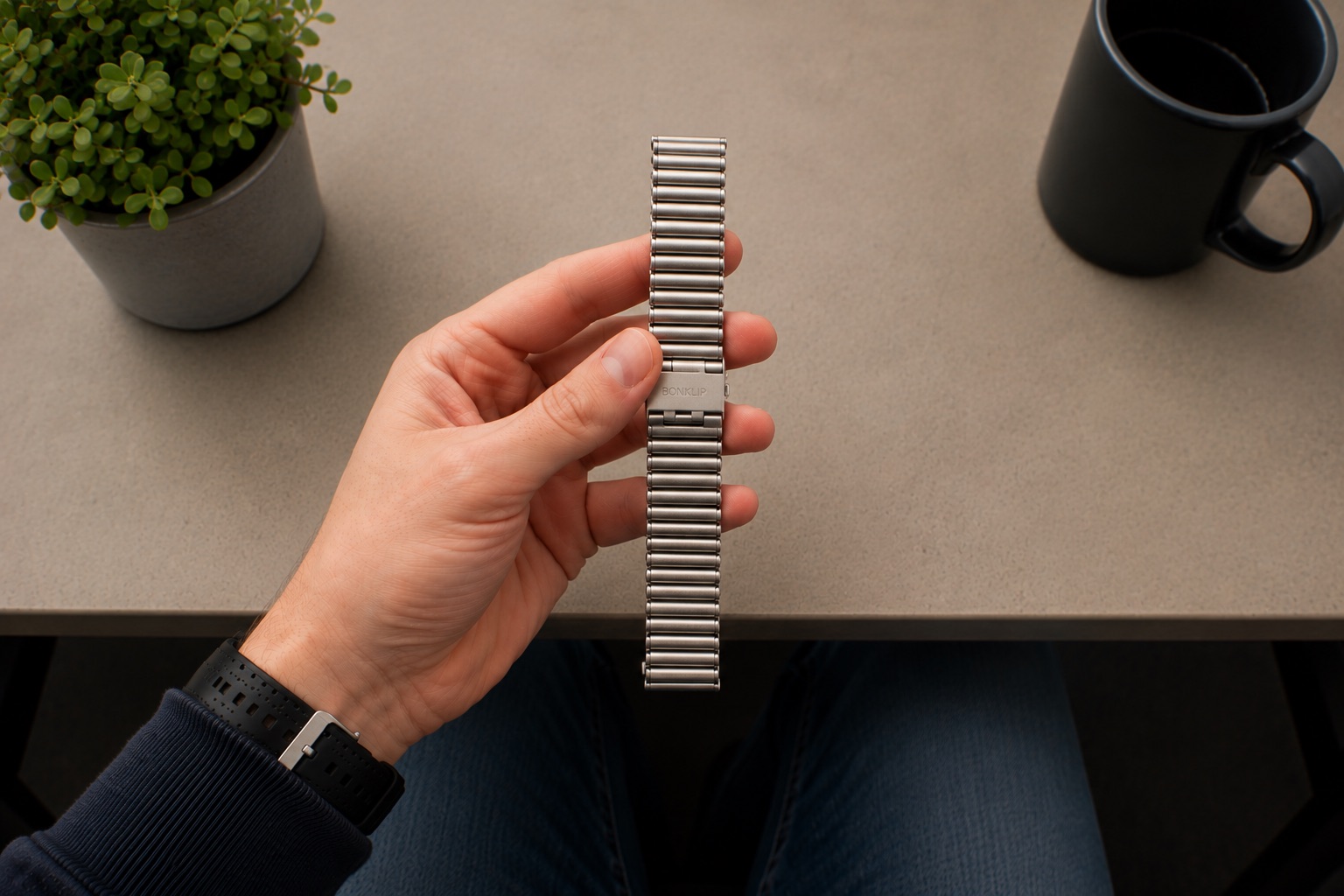 $15–$30
Bonklip Watch Bracelets
The spring-clip vintage bracelet that defined 1940s and 1950s watchmaking.
Read guide →$15–$40President Watch Bracelets
The most formal bracelet Rolex ever made — and what the aftermarket looks like.
Read guide →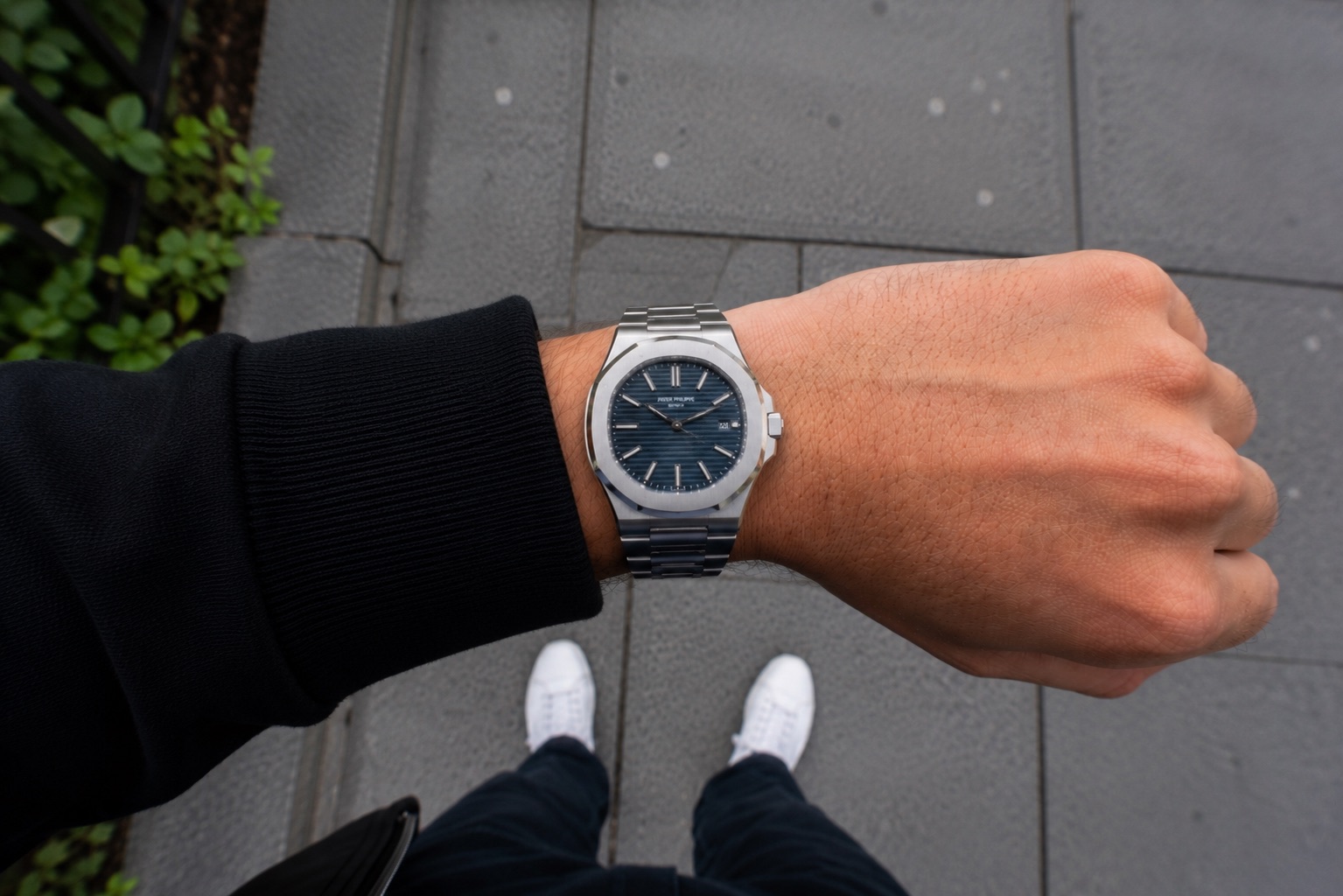 $15–$35
Shark Mesh Watch Bracelets
The folded steel mesh bracelet that defined 1960s and 1970s dive watches.
Read guide →How to Remove Watch Links
Resize any metal bracelet at home — no watchmaker required.
Read guide →Shop by Activity
Not sure which material category to start with? These guides cut across materials to answer the question by use case — what actually works for your situation.
How-To Guides
Practical guides for the most common watch strap tasks — sizing, swapping, cleaning, and installing. Everything you need to manage your strap collection confidently.
How to Remove Watch Links
Resize any metal bracelet at home — no watchmaker required.
Read guide →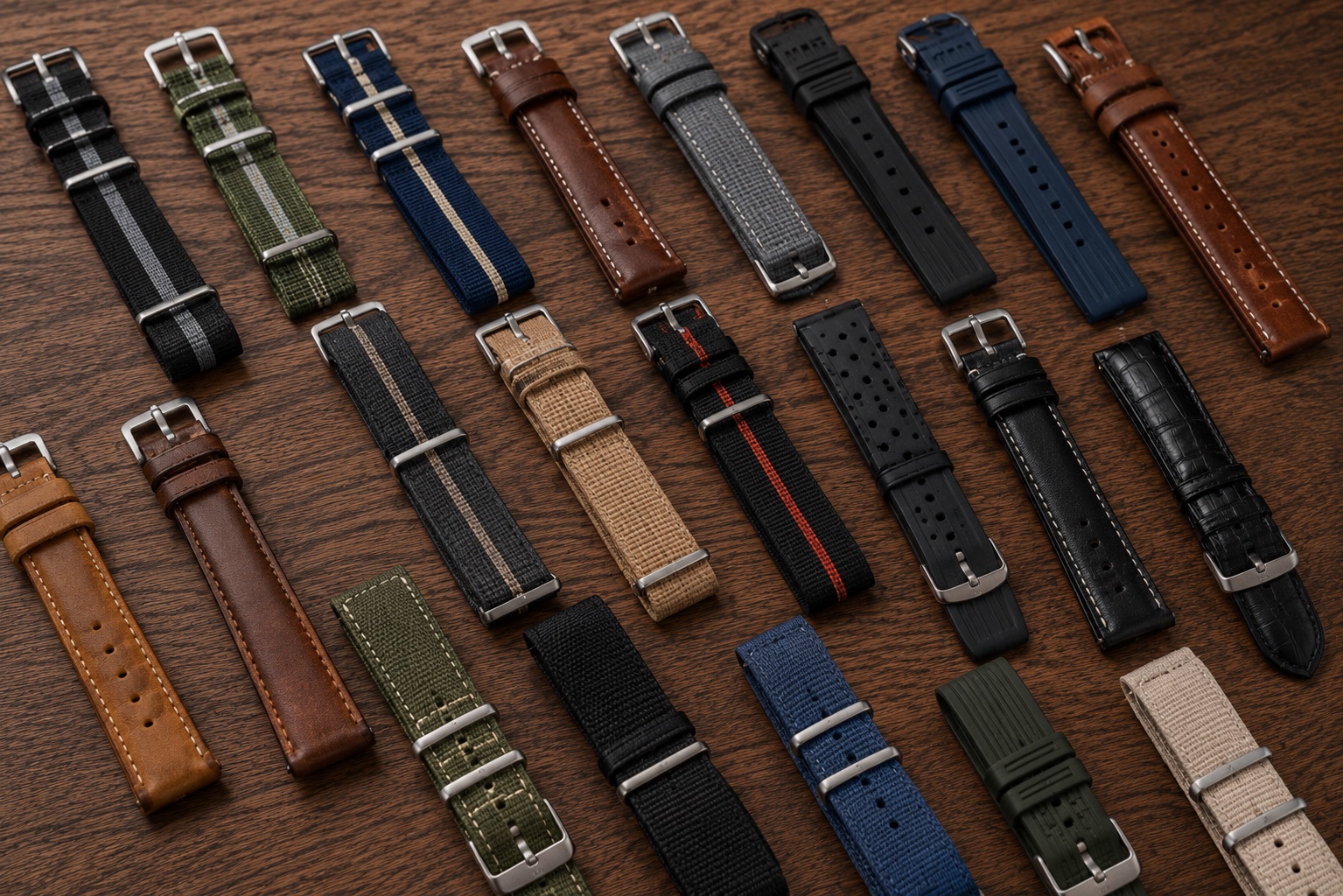
How to Change a Watch Strap
Standard spring bars, quick-release, and how not to scratch the case.
Read guide →Watch Band Sizing Guide
Lug width explained, how to measure it, and which size to order.
Read guide →How to Clean a Leather Watch Strap
Simple routine care that triples strap lifespan.
Read guide →How to Install a NATO Watch Strap
Thread order, two-layer design, and why it works — in under 5 minutes.
Read guide →Comparison Guides
Head-to-head breakdowns of the most common strap decisions — material comparisons, price vs quality, and what the differences actually mean in practice.
Leather vs Rubber Watch Straps
Different materials for different lives — here's how to choose.
Read guide →FKM vs Silicone Watch Straps
Same look, completely different materials — here's which one is actually better.
Read guide →Cheap vs Expensive Watch Straps
Where the premium is real, where it's markup, and what it means for how you buy.
Read guide →What Reddit Actually Recommends
The brands r/Watches and r/WatchHorology recommend most often — by material — with the affordable equivalents at 70–95% off.
Best Watch Straps According to Reddit
Read 200 r/Watches threads so you don't have to. The brands, the budget alternatives, the verdicts.
Read guide →Best NATO Straps According to Reddit
The brands r/Watches recommends, what they cost, and the affordable G10 nylon equivalents at 80–95% off.
Read guide →Best Leather Watch Straps According to Reddit
The brands r/Watches actually buys, when premium leather is worth it, and the budget alternatives at 80–90% off.
Read guide →Reference & Material Guides
Broader explainers covering the entire aftermarket category and the synthetic-leather alternatives most buyers don't know about.
Aftermarket Watch Straps
What aftermarket means, when it's better than OEM, and where to find the good stuff.
Read guide →Fake Leather Watch Straps — Explained
Vegan, PU, microfiber, synthetic — the actual breakdown of non-leather watch straps and when they make sense.
Read guide →Tools & Accessories
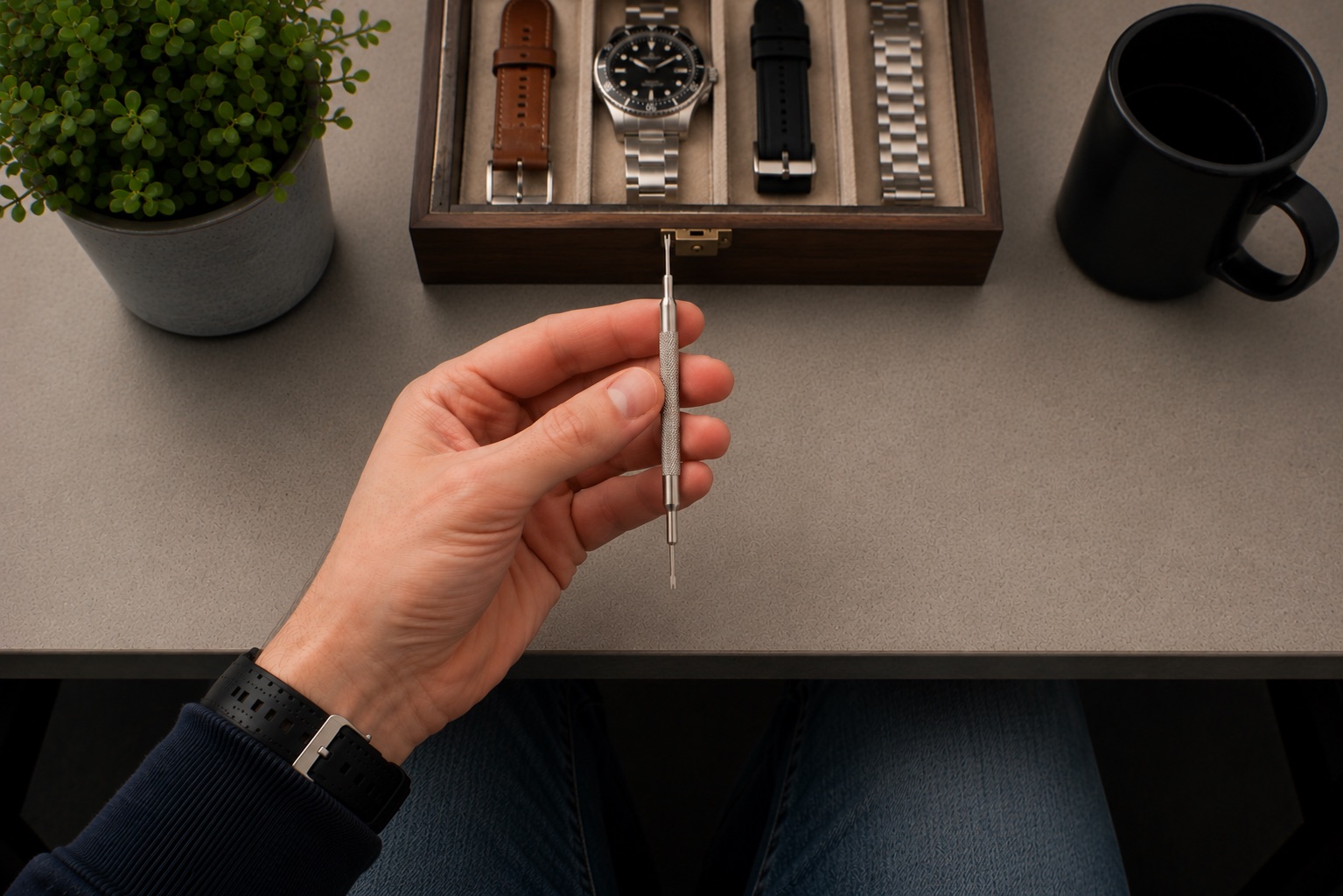
The tools that make watch collecting practical — changing straps safely, replacing batteries, keeping bracelets clean. A spring bar tool is the single most useful purchase for anyone who owns more than one strap. A case back opener means never paying a jeweller $20 for a 3-minute battery swap. These are one-time purchases that pay for themselves immediately.
 $5–$30
Spring Bar Tools
The one tool every watch collector needs. Here's what to actually buy.
Read guide →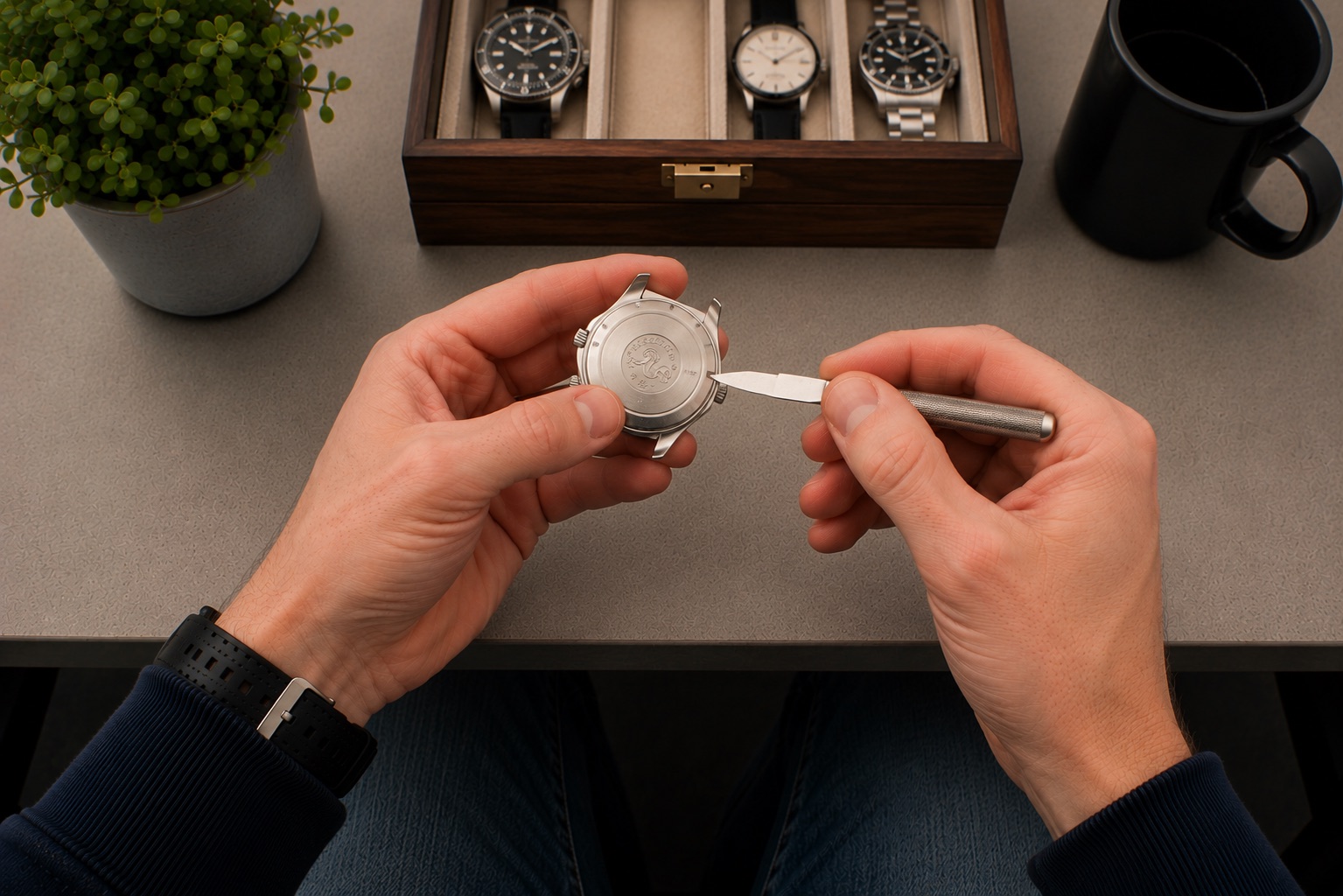 $8–$20
Watch Case Back Openers
Change your own battery and save the jeweller trip. Here's what to buy.
Read guide →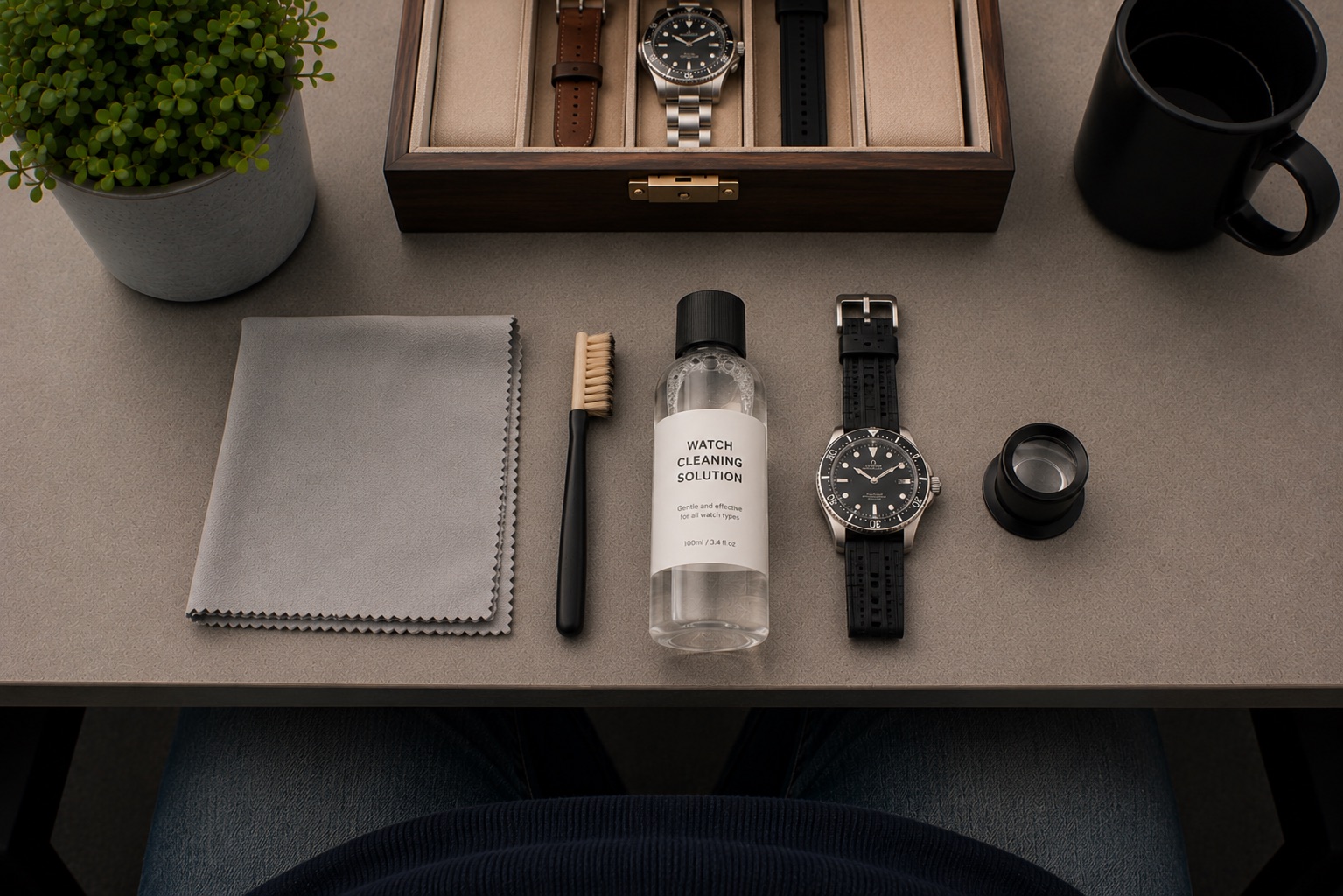 $5–$25
Watch Cleaning Kits
Keep your strap and case looking new — without paying boutique service prices.
Read guide →What does a good strap actually cost?
Boutique vs. well-reviewed other sites, by material.
Have a specific strap in mind?
Paste any product URL from Delugs, Horus, Strapcode, Molequin, or 50+ other brands and we'll find affordable alternatives in seconds.
Find your dupe →Frequently asked questions
How much should I spend on a watch strap?
For most strap types, $5–$20 from a well-reviewed sellers on other sites gets you the same functional material as a $60–$150 boutique strap. The honest premium for brand-name straps is in packaging, branding, and distribution — not in materially better nylon, leather, or rubber. The exception is shell cordovan, where the raw material cost is genuinely high and there's no cheap equivalent. For everything else, buy affordable and buy variety.
What's the best watch strap for everyday wear?
NATO straps win on pure practicality: under $10, survives everything, swaps in seconds, and looks good on almost any sport or casual watch. For dress and office wear, a calfskin leather strap in the $10–$20 range is the classic choice. If you're active or live somewhere warm and humid, FKM rubber is the most comfortable and low-maintenance option.
What's the difference between a strap and a bracelet?
Straps are made from soft materials — nylon, leather, rubber, canvas, sailcloth — and attach to the watch via spring bars. Bracelets are made from linked metal (usually stainless steel) and attach the same way, but they're heavier and more formal. Bracelets are harder to resize but look more integrated with the watch case. Most watches accept either.
Are affordable watch straps actually good quality?
Yes, for most strap types. The materials — G10 nylon, genuine leather, FKM rubber, 316L stainless steel — are commodity goods with well-established quality standards. A 4.7-star other sites NATO with 500+ orders uses the same weave density and hardware as a branded equivalent costing ten times more. Filter for sellers with 100+ reviews, 4.7+ stars, and specific material descriptions (e.g. '316L stainless' or 'genuine calfskin'), and quality is consistently good.
What watch strap is most water-resistant?
FKM rubber, then silicone rubber, then nylon (NATO/Zulu). Rubber is fully waterproof and resists pool chemicals and saltwater. NATOs handle splashes and sweat well but eventually absorb moisture — they dry in minutes and are fine for casual water exposure. Leather should be kept dry; sailcloth and canvas are water-resistant but not for submersion. Milanese and metal bracelets are unaffected by water but salt can accelerate corrosion.
What size watch strap do I need?
You need a strap that matches your watch's lug width — the distance between the two lugs in millimetres. Common sizes are 18mm, 20mm, and 22mm; 20mm is the most common. Check your watch's manual, the manufacturer's website, or search '[watch model] lug width.' Getting this right is the only measurement that matters for fit — all other dimensions are standardised.
Which strap type suits a dress watch?
Smooth calfskin leather in black or dark brown is the traditional choice. Suede works well for dress-casual. For something more interesting, Perlon (woven ladder nylon) reads refined despite being nylon, and pairs naturally with vintage dress pieces. Avoid rubber, NATO, and anything too thick or textured — these read as too casual on a thin-cased dress watch.
What's the most durable watch strap material?
For raw longevity, shell cordovan outlasts everything — a well-maintained cordovan strap improves over decades. For toughness under active wear, FKM rubber resists heat, chemicals, and UV degradation far better than silicone. For everyday durability at low cost, ballistic nylon (NATO) is essentially indestructible under normal use. Metal bracelets outlast all strap materials, though clasps and pins may need servicing over years of heavy use.