FKM vs Silicone Watch Straps
Same look, completely different materials — here's which one is actually better.
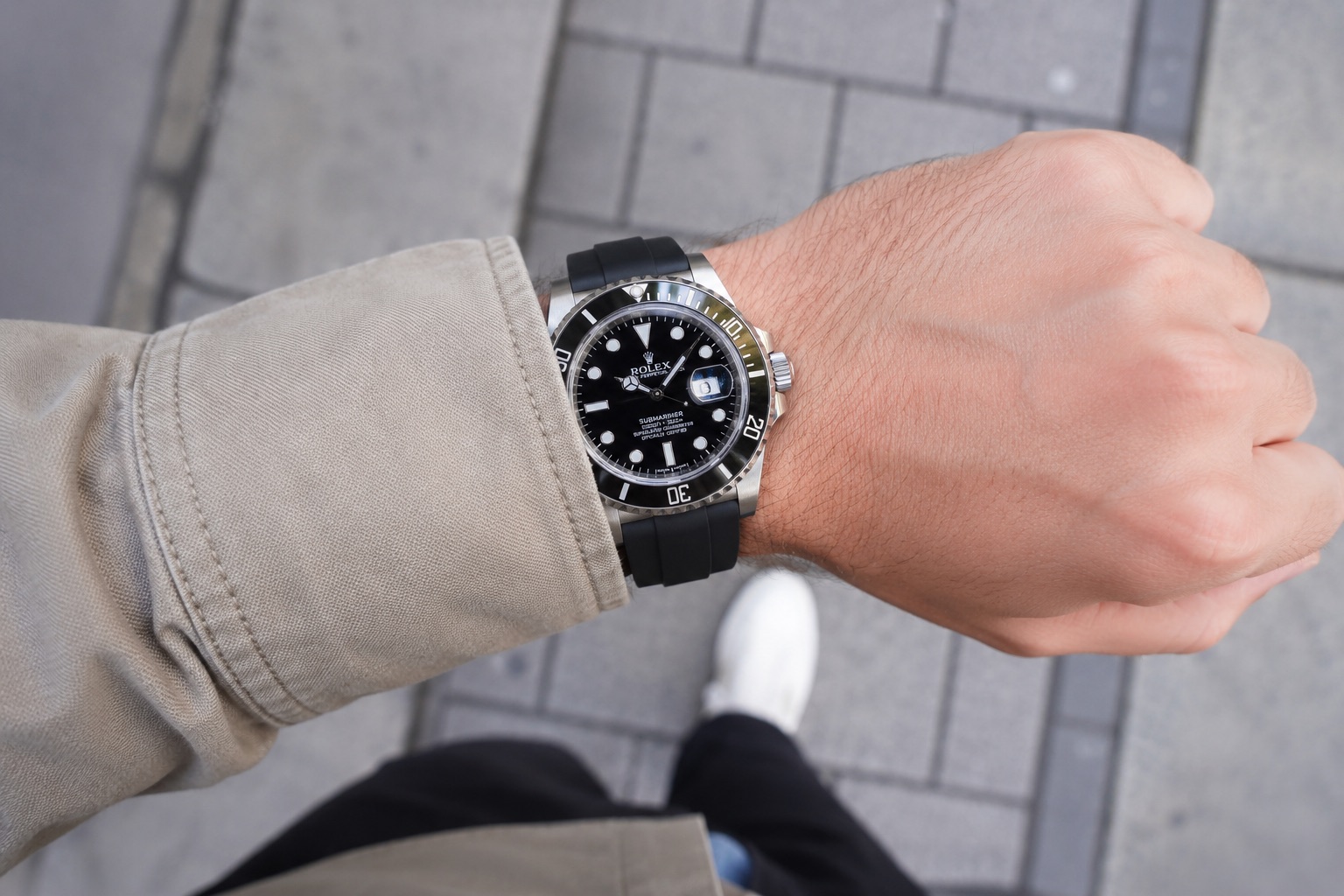 FKM vs Silicone Watch Straps
FKM (fluoroelastomer rubber) and silicone are both synthetic rubber compounds used in watch straps — and they look nearly identical from a distance. But they're different materials with different performance profiles. FKM costs more to produce and performs significantly better under real conditions. Here's why it matters and how to tell them apart when buying.
38 cheap fkm vs silicone watch straps on other sites
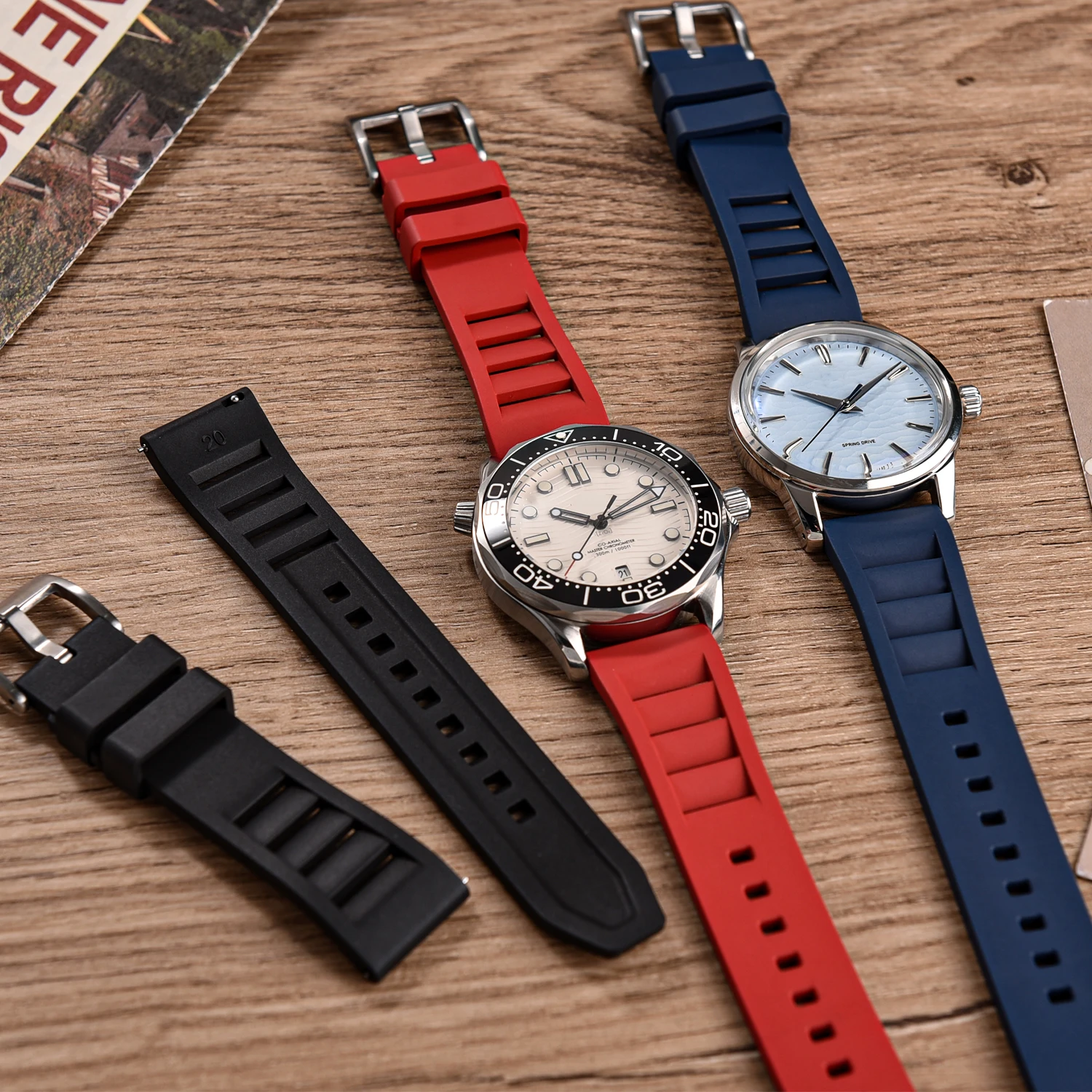
FKM Fluorine Rubber Watch Strap 20mm 22mm Quick Release Diving Band Premium Grade Waterproof with 316L Stainless Steel Buckle

FKM Strap 20mm 22mm 18 19 21mm Quick Release Diving Fluoro Rubber Watch Band for Omega Seiko Citizen Butterfly Buckle Bracelet
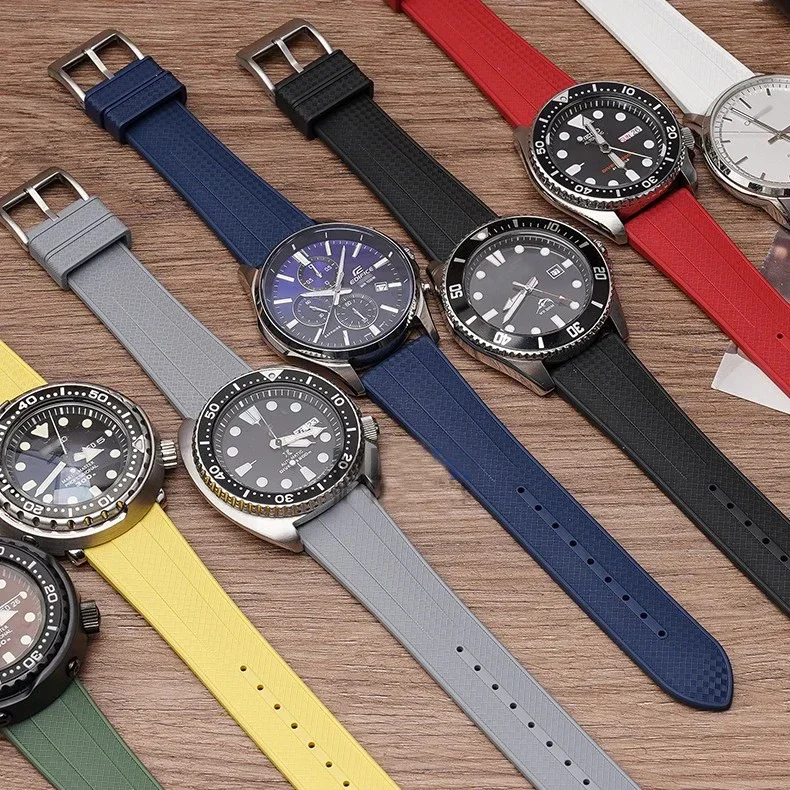
FKM Strap 18mm 20mm 22mm 24mm Quick Release Diving Waterproof Universal Fluoro Rubber Watch Band Bracelet for Omega MoonSwatch
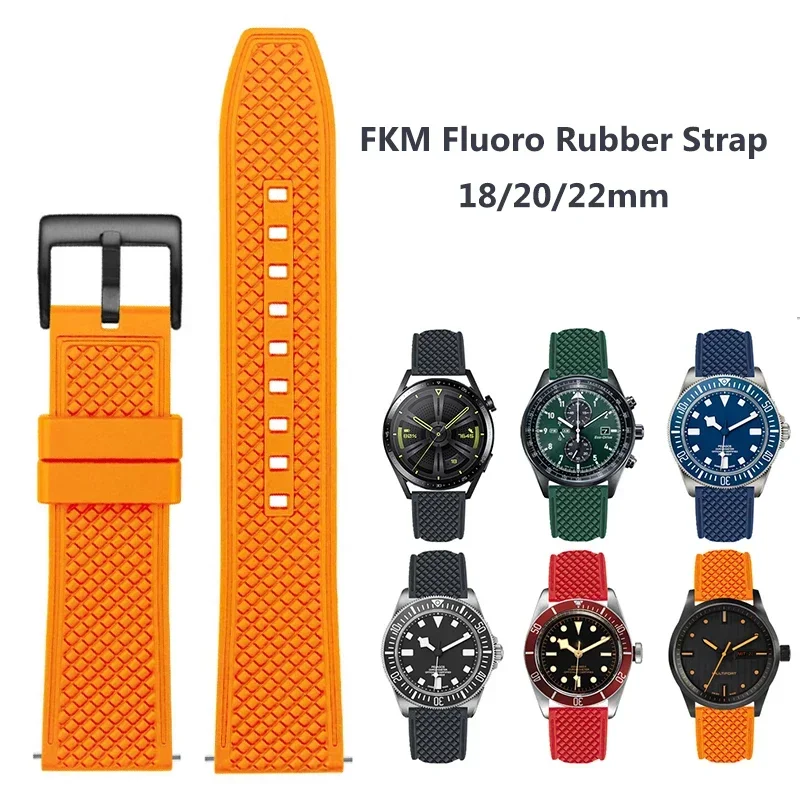
20mm 22mm Premium Grade Fluoro Rubber Strap New FKM Diving Quick Release Watch Band Bracelet for Omega MoonSwatch Seamaster 300
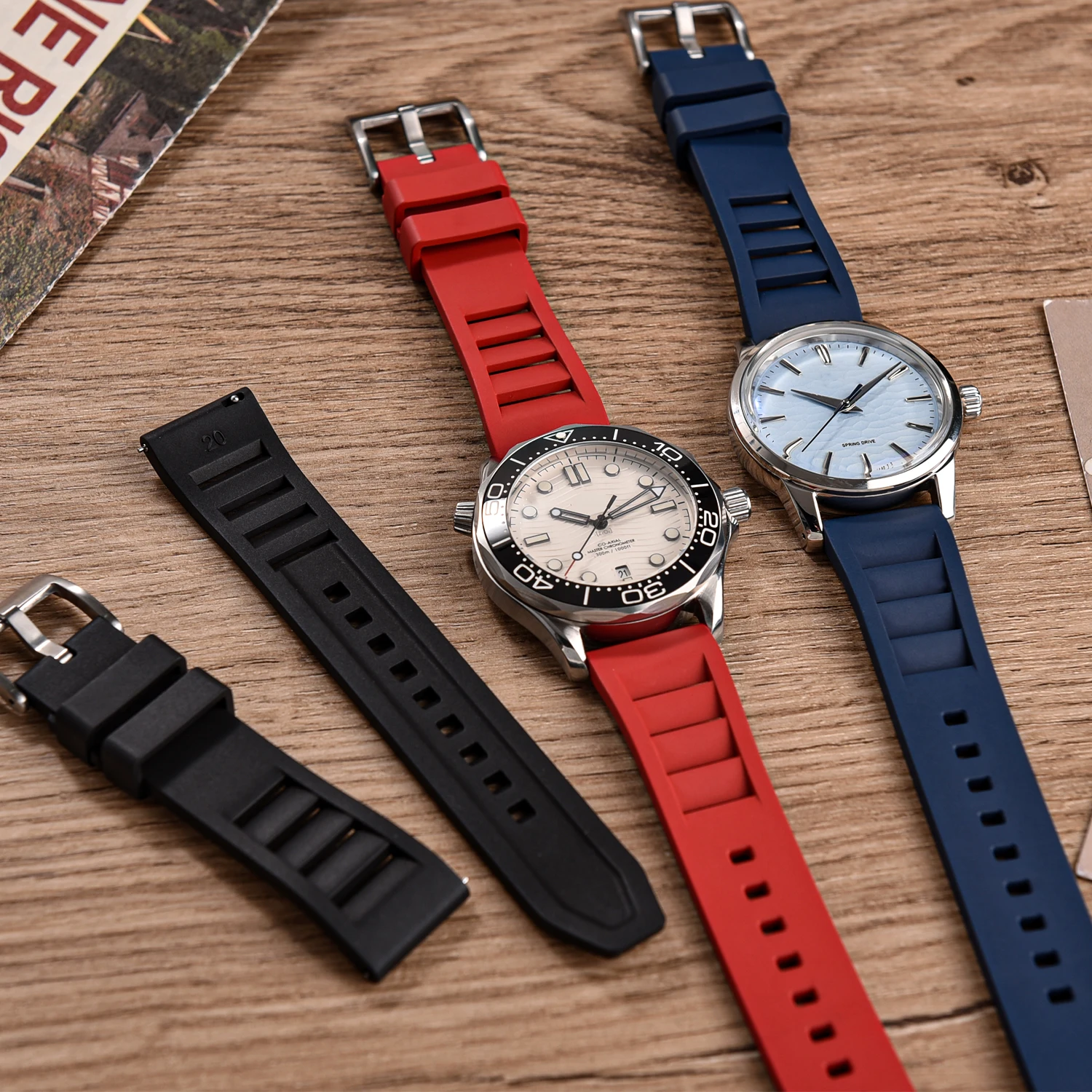
Premium FKM Fluoro Rubber Watch Strap Quick Release 20mm 22mm Diving Watch Band Soft Waterproof Wrist Bracelet Replacement Watch
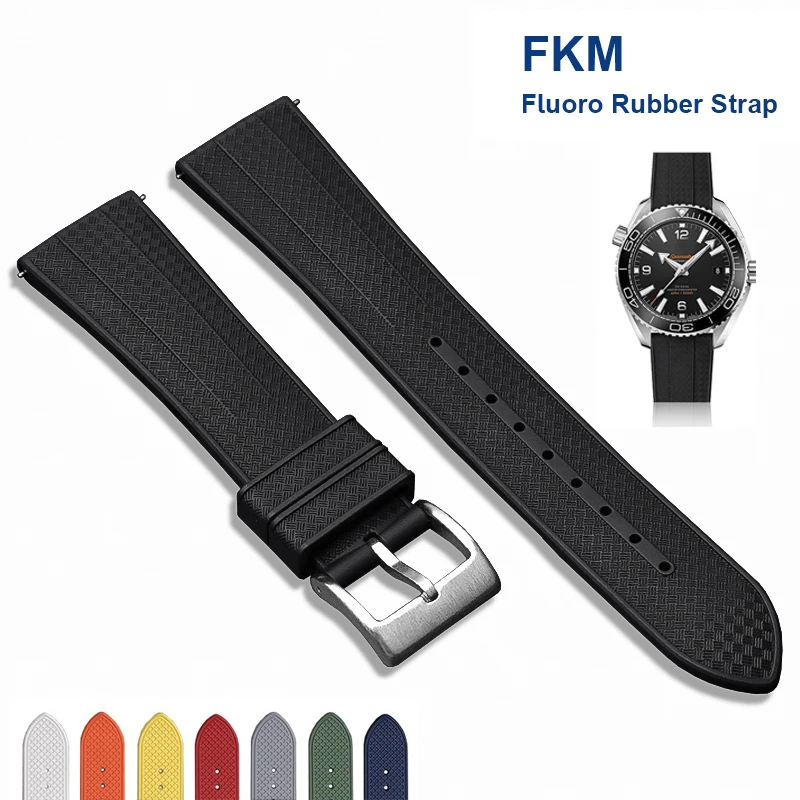
20mm 22mm New FKM Fluoro Rubber Watch Band Diving Quick Release Stainless Steel Pin Buckle Bracelet for Omega Seiko Rolex Strap

Premium Grade Mosaic FKM Rubber Watch Strap 20mm 22mm Quick Release Watch Bands Diving Waterproof Soft Wristband
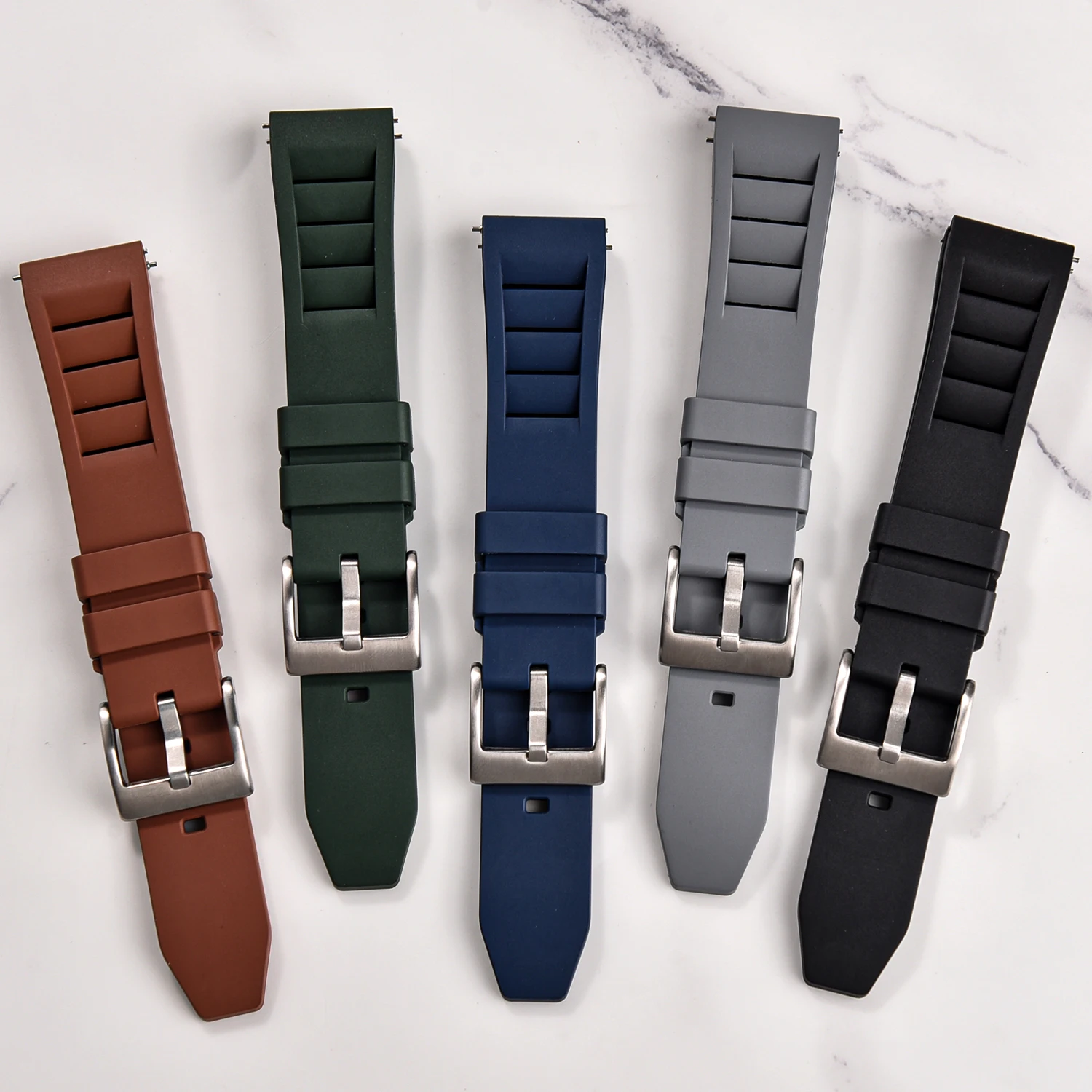
Premium Grade Fluoro Rubber Watch Strap 20mm 22mm For New FKM Watch Bands Diving Bracelet Quick Release Wrist Belt Accessories
What is FKM rubber?
FKM stands for Fluoroelastomer — a family of synthetic rubber compounds made from fluorinated polymers. The 'FKM' designation comes from ISO standard ASTM D1418 for elastomer classification. In watch straps, the same material is also called FKM rubber, fluorocarbon rubber, or (in Omega's case) 'rubber strap' without specifying the compound. FKM is the same material family used in aerospace gaskets, chemical plant seals, and semiconductor manufacturing — applications requiring resistance to heat, chemicals, and UV radiation. In watch straps, FKM is used by Rolex (OysterFlex), Omega (rubber Seamaster straps), IWC (rubber dive straps), and virtually all premium rubber strap brands including Horus Straps, Delugs, and Rubber B. The compound is more expensive to produce than silicone, which is why genuine FKM straps from boutique brands cost $60–$120.
What is silicone?
Silicone (polydimethylsiloxane) is a different synthetic rubber compound — softer, less expensive to produce, and widely used in consumer products from cooking utensils to medical devices. In watch straps, silicone is the material in most Apple Watch bands, Samsung smartwatch bands, and many entry-level sport bands. Silicone is perfectly serviceable for most watch wearing — it's flexible, waterproof, hypoallergenic, and comfortable. The main limitations compared to FKM are lower heat resistance, faster UV degradation, higher susceptibility to tearing under sharp impacts, and a distinctive 'rubbery' smell that intensifies with heat. Silicone watch straps are cheaper to manufacture, which is why most affordable rubber straps under $5 are silicone rather than FKM.
Key differences: FKM vs silicone
Heat resistance: FKM remains stable up to 200°C+ and doesn't soften in direct sunlight or near heat sources. Silicone softens somewhat above 120°C and can feel sticky after extended sun exposure on a hot day. UV resistance: FKM is significantly more UV-stable — silicone yellows and becomes tacky with prolonged UV exposure over months or years. FKM maintains its color and surface finish over the same period. Chemical resistance: FKM resists pool chlorine, saltwater, oils, sunscreen, and most chemicals without degradation. Silicone handles water well but degrades faster with chemical exposure. Tear resistance: FKM is denser and more tear-resistant than silicone — less likely to nick or tear at the lug holes or buckle bar under strain. Smell: FKM has minimal odor under normal conditions. Silicone has a characteristic synthetic rubber smell that intensifies with heat. Price: affordable FKM straps cost $8–$20; silicone straps cost $3–$8. The material cost difference is real.
How to tell FKM from silicone when buying from budget sellers
Seller descriptions are the starting point — listings that specify 'FKM,' 'fluoroelastomer,' or 'fluorocarbon rubber' are more likely to be accurate than those that say only 'rubber' or 'silicone rubber.' Price is a secondary signal: genuine FKM straps with good finishing cost $10+ from credible sellers — straps under $6 claiming FKM should be verified. The texture in product photos is a useful indicator: FKM has a matte, slightly dense appearance; silicone often looks glossier and lighter. At a physical level, FKM feels slightly denser and less squeaky than silicone when flexed. For certainty, buy from sellers who explicitly describe the material as FKM and have reviews mentioning 'no smell' or 'firm rubber' — these are reliable user signals for FKM rather than silicone.
Which should you buy?
FKM if: you wear your watch during water sports, in hot or sunny environments, near chemicals (gym, kitchen, outdoor work), or you simply want the strap to last as long as possible. FKM is the honest choice for a daily sport or dive watch strap. Silicone if: you want the lowest possible price and primarily wear the watch in controlled environments — office, casual walking, light outdoor use. Silicone is perfectly adequate for light use conditions and costs less than half the price of equivalent FKM. Both if: you want to experiment with colors before committing — buy a $4 silicone strap to test a colorway you like, then buy FKM in your chosen color if you decide to keep it. For dive watches specifically, FKM is the correct choice — silicone's weaker chemical resistance makes it a poor long-term choice for regular salt and chlorine exposure.
Frequently asked questions
Is FKM better than silicone for watch straps?
Yes, in most performance categories — FKM (fluoroelastomer) outperforms silicone in heat resistance, UV stability, chemical resistance, and tear strength. For a watch worn daily in varied conditions — including gym, outdoor activity, water exposure, or simply hot and sunny environments — FKM lasts significantly longer and maintains its appearance better than silicone. The tradeoff is cost: FKM straps cost $8–$20 versus $3–$8 for silicone. For light indoor use or casual wear, silicone performs adequately and the price difference may not matter. For a dive watch, tool watch, or any watch worn actively, FKM is the clearly superior material choice.
Why do rubber watch straps smell?
The smell in a rubber watch strap is almost always from silicone, not FKM. Silicone has a characteristic synthetic rubber odor that intensifies with body heat — the warmth of your wrist amplifies it noticeably. New silicone straps often have a strong smell that fades somewhat with airing out, but never disappears entirely for most silicone compounds. FKM rubber has minimal odor under normal wearing conditions. If you receive an 'FKM' strap that has a strong rubber smell, it is likely silicone. A genuine FKM strap from a reputable other sites seller should have little to no noticeable odor when worn — this is one of the clearest practical ways to distinguish the two materials without lab testing.
What does FKM stand for?
FKM stands for Fluoroelastomer — specifically, the ISO/ASTM D1418 designation for fluorinated rubber compounds. The K in FKM represents 'fluoro' in the international elastomer classification system. FKM is a family of compounds rather than a single material — the most common variant used in watch straps is Viton (a DuPont/Chemours tradename), though most watch strap brands use the generic FKM designation rather than specifying the exact variant. The material was developed in the 1950s for aerospace applications requiring rubber that could resist jet fuel, hydraulic fluid, and extreme temperatures — the same properties that make it an excellent watch strap material.
Do Rolex rubber straps use FKM?
Yes — Rolex's OysterFlex bracelet, introduced in 2015, is made from a metal blade core overmolded with FKM fluoroelastomer. The OysterFlex is technically a bracelet rather than a strap (it uses end links that attach to the case like a metal bracelet) but the flexible outer material is FKM rubber. Omega's Seamaster and Speedmaster rubber straps are also FKM, as are the rubber straps from IWC, Breitling, and TAG Heuer. Most premium watch brands that offer rubber strap options have moved to FKM specifically because of its durability and chemical resistance compared to earlier silicone or natural rubber straps. affordable FKM straps use the same fluoroelastomer compound — the difference is in the finished edge quality and the case-specific lug fitment of OEM options.
Find a dupe for a specific strap
Paste a product URL from any premium strap brand and we'll match it to affordable alternatives.
Try the tool →