How to Clean Watch Straps
Different materials need different care — here's exactly what to use on each.
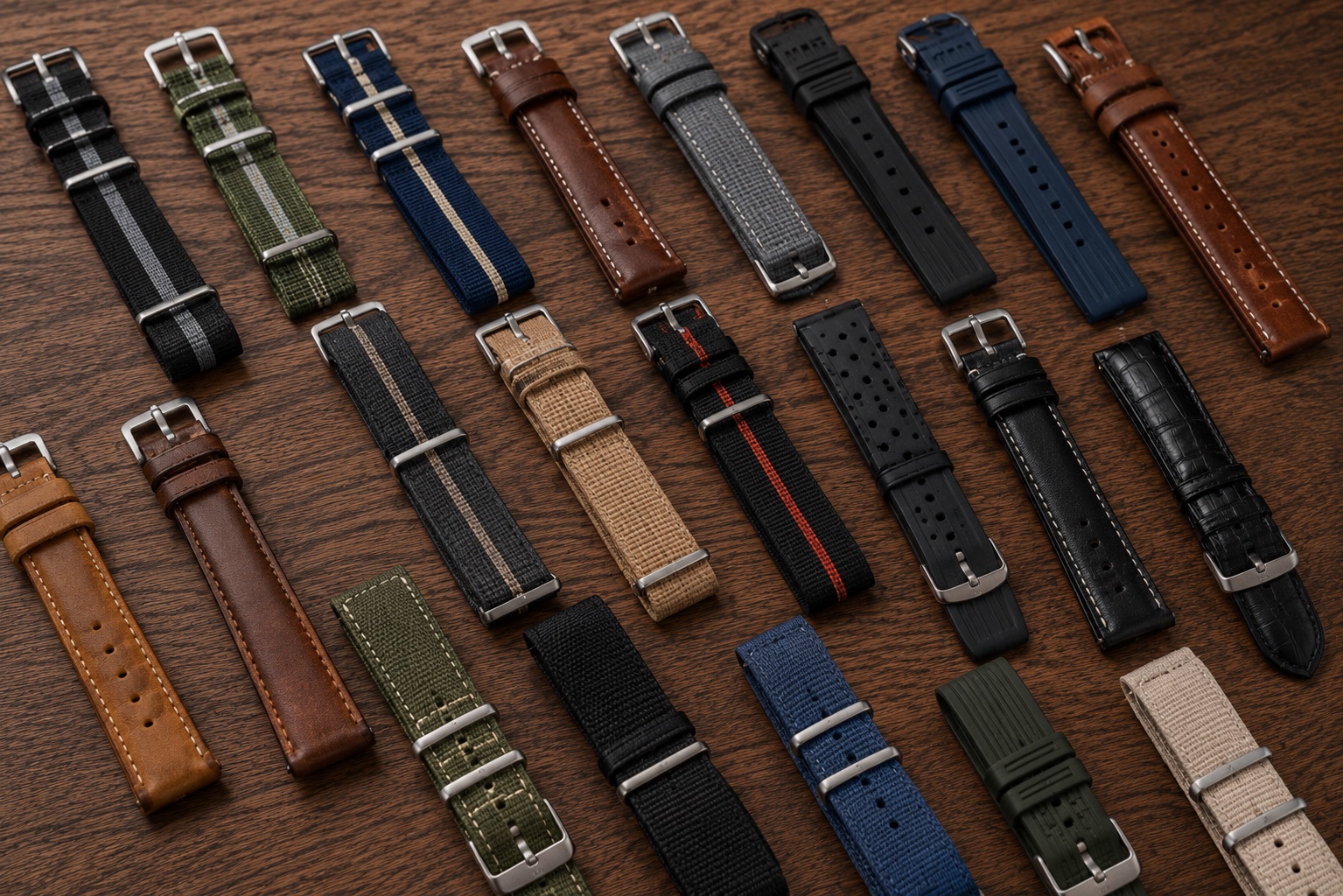 How to Clean Watch Straps
Watch straps collect sweat, dead skin cells, and bacteria every single day — and most people never clean them. A dirty strap shortens its lifespan, causes skin irritation, and smells bad over time. The good news: cleaning a watch strap takes two minutes and costs nothing if you already own dish soap and a soft toothbrush. The method depends entirely on the material — rubber tolerates water and soap aggressively, leather doesn't, NATO nylon sits somewhere in between, and metal bracelets benefit from an ultrasonic cleaner or a soapy brush. This guide covers all four.
How to clean rubber and silicone straps
Rubber and FKM silicone are the easiest straps to clean — they're fully waterproof and chemically inert. Remove the strap from the watch (or keep it on if the watch is water-resistant). Mix a few drops of dish soap with warm water. Scrub with a soft toothbrush, paying attention to the buckle holes, the inside surface, and any texture channels where sweat collects. Rinse thoroughly under running water. Pat dry with a cloth and leave to air-dry for 10 minutes before wearing. Do this weekly for daily-wear rubber straps. Avoid alcohol-based cleaners or acetone — they can dry out and crack even FKM rubber over time.
How to clean leather straps
Leather is the most demanding strap material to clean because water damages it if over-applied. For light cleaning, wipe the strap with a slightly damp microfiber cloth — barely moist, not wet. For deeper cleaning, use a small amount of saddle soap on a damp cloth, work it into the leather gently with circular motions, then wipe off with a clean damp cloth and let it air-dry completely away from direct heat. Once dry, apply a leather conditioner (pure neatsfoot oil, Leather Honey, or a similar product) to prevent the leather from drying and cracking. Never soak a leather strap, put it in a washing machine, or dry it with a hair dryer. If the strap has a lingering odour, a small dab of white vinegar on a cloth — wiped on and immediately off — neutralises it without damaging the leather.
How to clean NATO and nylon straps
NATO straps are the simplest of all to clean because nylon is machine-washable. The easiest method: remove the strap from the watch, drop it in a small mesh laundry bag, and run it on a cold delicate cycle. Hang to air-dry — do not tumble-dry, as heat can warp the hardware or shrink the nylon. For a quick clean without washing: mix a drop of dish soap with warm water, scrub with a soft brush, rinse under the tap, and hang to dry. For straps with stainless steel hardware, check the hardware after washing — if there's any surface rust forming (cheap plating), dry the hardware immediately and avoid further machine washing. PVD and solid stainless hardware handles repeated washes indefinitely.
How to clean metal bracelets
Metal bracelets collect grime in the links and clasp mechanism where a cloth can't reach. The best tool is an ultrasonic cleaner — small units cost $20–$40 and clean bracelets in five minutes using just water and a drop of dish soap. Without an ultrasonic cleaner: fill a bowl with warm soapy water, submerge the bracelet, and scrub aggressively with a stiff toothbrush — particularly inside the clasp and between links. Rinse under running water, shake off excess, and dry thoroughly with a cloth. Pay special attention to the clasp mechanism where moisture hides and causes corrosion. For gold-tone or PVD bracelets, use a soft cloth rather than a stiff brush — abrasive brushing scratches the coating. For raw stainless steel, a stiff nylon brush is fine.
How often should you clean your strap?
Rubber and silicone: weekly for daily-wear straps, or any time you notice odour. NATO nylon: monthly, or immediately after heavy sweating or water exposure. Leather: wipe down monthly with a damp cloth; deep-clean with saddle soap every three to six months; condition every six months. Metal bracelets: monthly ultrasonic or brush clean, plus an immediate wipe-down after salt water or heavy sweat exposure. Sweat is the enemy of all strap materials — it's acidic, leaves mineral deposits, and accelerates degradation. A quick 30-second wipe with a damp cloth after each wear extends strap life significantly.
Frequently asked questions
Can I put a watch strap in the washing machine?
It depends on the material. NATO and nylon straps can go in a washing machine on a cold delicate cycle — put them in a mesh laundry bag to protect the hardware and prevent tangling. Rubber and silicone straps can technically survive a machine wash but don't need one; a scrub with soapy water and a toothbrush is faster and more effective. Leather straps should never go in a washing machine — water and mechanical agitation will crack and ruin them. Metal bracelets should not go in the washing machine — the tumbling damages the links and clasp. For most straps, hand washing takes two minutes and is the better option.
How do I remove smell from a watch strap?
The smell comes from bacteria feeding on sweat and dead skin — cleaning the strap removes the source. For rubber straps: scrub with dish soap and a toothbrush, rinse thoroughly, and the smell goes away. If the smell persists, soak the strap in a 1:4 solution of white vinegar and water for 10 minutes, then rinse. For NATO nylon: machine wash or hand wash with soap. For leather: a small dab of white vinegar on a cloth, wiped on and off immediately, neutralises odour without damaging the leather — follow with leather conditioner. For metal bracelets: an ultrasonic clean or a thorough soapy brush scrub in the clasp mechanism, where most of the bacteria concentrate. For all materials: the smell comes back within days if you clean the strap without also cleaning the area of skin it contacts.
Can I use hand sanitiser or alcohol to clean my watch strap?
Only on rubber and metal. Isopropyl alcohol and hand sanitiser are effective antibacterials but strip oils and dyes from organic materials. On rubber or FKM silicone, a quick wipe with an alcohol pad is safe for occasional disinfection — but avoid frequent use, as it gradually dries the rubber. On metal bracelets, alcohol wipes are safe. On leather, alcohol strips the natural oils and dyes, leading to cracking and colour loss — never use it. On NATO nylon, diluted alcohol is unlikely to cause damage but is unnecessary; soap and water are more effective. If you want to disinfect a strap after illness, rubber straps can handle it; leather straps should be replaced or cleaned with a dedicated leather cleaner and immediately conditioned.
How do I clean the area under a watch strap?
The skin under a watch strap — particularly the wrist flexion crease — is one of the most bacteria-dense areas on the body and a common site for contact dermatitis. Clean it with soap and water every time you remove your watch. Rotate between at least two straps so neither is worn continuously. Allow the skin to breathe for a few hours per day without the watch. If you experience persistent redness, itching, or a rash, the issue is usually one of three things: nickel allergy from the hardware (switch to titanium or coated buckles), an allergy to a specific strap material (switch to silicone), or a moisture and bacteria build-up from wearing the strap too tight or too long without cleaning. A gap of one finger-width between strap and wrist allows air circulation and reduces bacterial growth significantly.
Find a dupe for a specific strap
Paste a product URL from any premium strap brand and we'll match it to affordable alternatives.
Try the tool →